


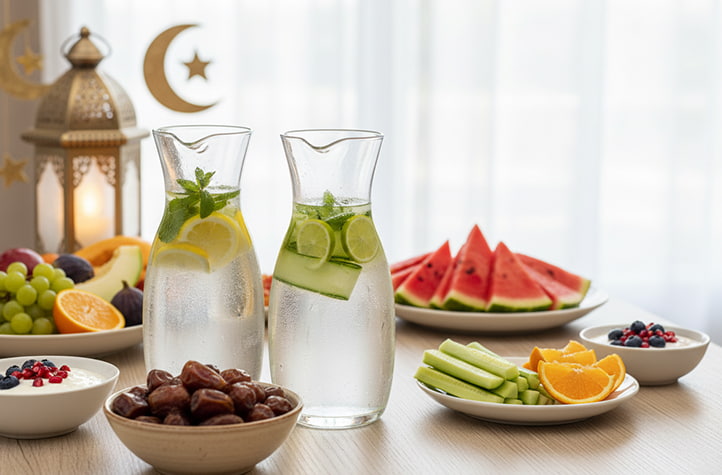
Fasting changes how your body manages water and electrolytes. During long fasting hours, limited fluid intake can cause mild dehydration, making muscles tighten or ache. Research shows that up to four in ten people experience muscle cramps or fatigue during fasting due to fluid and mineral loss. With simple hydration habits, these cramps can often be prevented safely.
Why Do Muscle Cramps Occur During Fasting?
Muscle cramps during fasting are usually caused by dehydration and loss of key minerals that help your muscles contract smoothly. When you spend many hours without water, your body loses minerals that balance fluid and nerve activity, such as sodium, potassium, and magnesium.
Long gaps between meals can also increase fatigue and muscle strain. These changes make muscles in the legs, calves, and feet tighten or spasm more easily, especially at night or after prayer-related movements.
How Dehydration Leads to Muscle Cramps and Pain
When your body lacks water, the balance between muscles and nerves is disrupted. Every muscle movement, from simple stretches to daily tasks, is supported by water. Therefore, without enough fluids, your muscles may struggle to contract and relax, leading to tension or spasms. Here’s how dehydration contributes to discomfort:
- • Water enables muscle movement: It keeps muscle fibres flexible and reduces friction during activity.
- • Nerve signals become erratic: Dehydration can cause misfiring nerves, leading to sudden cramps.
- • Circulation slows down: Reduced fluid volume means less oxygen reaches muscles.
- • Cramps often strike the legs and feet: These areas bear more strain and lose fluid faster during fasting.
Hydration Tips for Fasting to Prevent Muscle Cramps
Hydration is more about cellular activity of absorption than just the amount of intake. If you consume a lot of fluid at once, that triggers the kidneys to respond with a "flush" action. It filters the fluid out before it ever reaches your tissues. Small sips across suhoor and iftar maintain blood volume and ensure electrolytes like sodium and potassium stay balanced for consistent muscle function.
- • The goal is to drink small, frequent amounts of fluid to stay comfortably hydrated.
- • Remember, sudden intake can overwhelm the stomach and reduce absorption.
- • You can include natural mineral fluids if advised; for instance, coconut water or clear soups can restore lost electrolytes.
- • Keep caffeine and sugary drinks under control as both can increase fluid loss and leave you dehydrated.
- • Check urine colour, pale yellow usually indicates good hydration balance.
Best Fluids to Drink While Fasting
Not all fluids hydrate your body the same way. Some drinks replenish water and minerals more effectively, helping your muscles recover from long fasting hours. Here are the best options to support hydration and prevent cramps:
- • Plain water: The simplest and safest way to maintain hydration.
- • Coconut water (in moderation): Naturally rich in potassium and magnesium to support muscle health.
- • Milk or yoghurt-based drinks: Offer calcium and protein, which aid muscle recovery.
- • Clear soups or broths: Replenish salt and fluids gently after iftar.
Foods That Help Prevent Muscle Cramps During Fasting
What you eat during suhoor and iftar can make a big difference to how your muscles feel. Choosing foods rich in essential minerals helps your body retain fluids and reduces the risk of cramps.
- • Potassium-rich foods such as Bananas, dates, and apricots help regulate muscle contractions and fluid balance.
- • Magnesium-rich foods like Nuts, seeds, and leafy greens reduce muscle tension and fatigue.
- • Calcium-rich items such as Milk, yoghurt, and fortified plant alternatives strengthen muscle function.
- • Balanced suhoor and iftar meals can be prepared by combining fruits, vegetables, lean proteins, and whole grains for steady energy and recovery.
Common Hydration Mistakes That Increase Muscle Cramps
Even with the best intentions, small hydration errors can undo your fasting efforts. Being aware of these patterns helps you stay comfortable and cramp-free. By correcting these simple habits, you can maintain better fluid balance and protect muscle health throughout your fast:
- • Skipping suhoor limits your hydration duration and increases dehydration risk.
- • Excess salt pulls water out of your cells, which leads to cramping and bloating.
- • Too much caffeine from drinks like coffee, tea, or cola can cause extra fluid loss.
- • Ignoring thirst after iftar: Delaying water intake until late in the night reduces total hydration time.
Physical Activity Tips to Reduce Muscle Pain While Fasting
Light, well-timed activity can keep your muscles flexible and improve blood circulation during fasting. The key is to move mindfully and avoid strain when your body is low on fluids. These small adjustments help reduce stiffness, prevent fatigue, and make fasting more comfortable for your body.
- • Gentle stretching that includes spending a few minutes after prayers or before iftar loosens tight muscles.
- • Light walking after iftar, a slow walk, aids digestion and circulation.
- • Avoid intense workouts while fasting, as strenuous exercise without hydration may trigger cramps or dizziness.
- • Prioritise rest and sleep because your muscles recover and restore balance during quality rest.
When Muscle Cramps During Fasting Need Medical Attention
Most fasting-related cramps ease with rest and hydration. However, continuous or worsening cramps may point to an underlying health issue. Sometimes, these signs are hints of electrolyte imbalance or circulation problems. You need to seek medical advice if you experience:
- • Cramps that persist despite adequate hydration.
- • Swelling, redness, or warmth around the affected muscle.
- • Severe pain or muscle weakness.
- • Dizziness, confusion, or fainting.
- • Cramps accompanied by vomiting or extreme fatigue.
Evaluation at the first hour helps rule out deficiencies or deeper musculoskeletal concerns and ensures safe fasting under medical guidance.
Consulting an Orthopaedic Specialist for Recurrent Muscle Cramps
Advanced diagnostic tools, such as muscle and nerve tests, can help identify the source precisely. At the best orthopaedic hospital in Dubai, specialists offer guidance on safe fasting, muscle care, and custom treatment plans for you, to keep you active and pain-free.
Prompt consultation ensures that you can fast comfortably and maintain long-term musculoskeletal health. Here are the symptoms that require immediate medical attention:
- • If cramps continue even after you hydrate well and eat balanced meals.
- • Recurrent muscle pain can sometimes stem from underlying joint, nerve, or posture-related issues.
- • Cramps occur frequently or interfere with sleep or movement, which can indicate mineral deficiencies, assess circulation, muscular or neurological conditions.
Conclusion
Fasting becomes smoother when hydration and nutrition work together. Sip water regularly between iftar and suhoor, choose potassium- and magnesium-rich foods, and rest well. If muscle cramps persist despite care, consulting specialists at the best orthopaedic hospital in Dubai can help identify underlying causes and support healthy, comfortable fasting.
FAQs
1. Why do muscle cramps happen during fasting?
You may experience muscle cramps if your body loses essential minerals like potassium and magnesium. Water helps, but balanced meals and light electrolyte fluids between iftar and suhoor make a bigger difference.
2. How to properly hydrate while fasting?
You should consume 2-3 litres of water or electrolyte-rich fluids (like coconut water or broth) gradually between breaking and beginning the fast. Gradual consumption will prevent dehydration-related fatigue and headaches. Moreover, consume water-rich foods and avoid caffeinated or sugary beverages.
3. What are the early signs of dehydration during fasting?
Watch for a dry mouth, darker urine, fatigue, or light-headedness. These signs mean your body needs fluids and rest. Start sipping water slowly after iftar.
4. Can dehydration cause muscle pain while fasting?
Yes, during fasting, dehydration is a primary cause of muscle pain, cramps, and aches. It is felt especially during extended periods without water. Dehydration reduces blood volume and impairs electrolyte balance (potassium, sodium, magnesium), which can cause muscle spasms or cramps.
5. Can drinking too much water cause cramps?
Yes. Rapidly drinking large amounts of plain water can wash out minerals. Sip steadily through the night to maintain hydration and electrolyte balance.
6. How do I rehydrate my body and stop cramping?
Start sipping water or clear fluids soon after iftar and continue at intervals until suhoor. This gradual rhythm helps prevent cramps and supports digestion.
7. What simple steps help relieve cramps at home?
Gently stretch or massage the cramped area, apply warmth, or take a short walk after iftar. These steps relax the muscle and ease discomfort.
8. How to avoid muscle cramps when fasting?
Your diet should include foods rich in potassium, magnesium, and calcium, such as bananas, dates, nuts, and yoghurt. They support muscle function and restore minerals lost during fasting.
9. When should I see a doctor for muscle cramps while fasting?
If cramps persist, become severe, or affect movement despite good hydration, consult a doctor. A specialist can rule out underlying causes and guide safe fasting practices.
Reference
https://www.nhs.uk/conditions/dehydration/
https://www.who.int/news-room/fact-sheets/detail/healthy-diet