

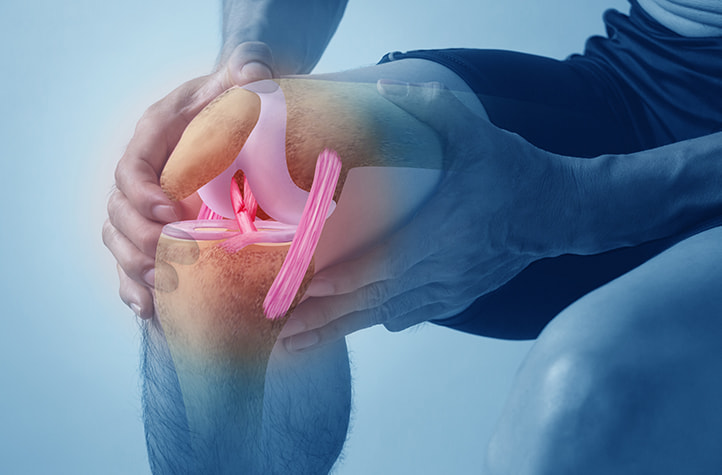
A simple twist while walking down the stairs, a misstep during football, or a hard plant on the tennis court can make the knee suddenly “give way.” It’s a worrying feeling that can limit confidence at work, exercise, and in everyday life. The Anterior Cruciate Ligament (ACL) is a key stabiliser of the knee. When it tears, people often notice instability, difficulty pivoting or changing direction, and pain or swelling after activity.
ACL reconstruction is a common orthopaedic procedure that replaces the torn ligament with a new graft to help restore knee stability and protect long-term joint health. If you are already consulting, your medical team will discuss whether surgery or structured rehabilitation, or a combination of both will work best for your goal of safe ACL reconstruction recovery.
What is ACL Reconstruction?
The ACL is responsible for initiating forward motion of the shinbone and maintaining rotational stability in the knee joint. When injured, it may not heal naturally due to limited blood circulation in the region. ACL repair revolves around reattaching the torn ends of the ligament. Reconstruction (in contrast) uses graft tissue to replace the damaged ligament. This tissue may be replaced from the patient’s own body or from a donor.
Common causes of ACL injuries are sporting collisions, improper landings, abrupt stops, and car accidents. The surgical reconstruction of the ACL aims to provide structural stability, minimise long-term degeneration, and aid patients' return to their normal activities without hassle.
Why is ACL Performed?
ACL reconstruction is recommended when a complete tear persists despite rehabilitation. It’s considered for people needing reliable pivoting or manual work, with a recurrent sense of instability in the knee, associated meniscus/cartilage injury, or objective laxity on testing—supporting safe return to activity with structured ACL reconstruction physiotherapy.
When is ACL Reconstruction Needed?
Complete ACL reconstruction is not necessary in every case. The decision to proceed with ACL reconstruction surgery depends on the type of ligament tear, the person’s age, their lifestyle, and the level of instability they may experience after the injury. The following scenarios help explain when surgery may or may not be required.
1. Complete ACL Tear with Knee Instability
When the ligament is fully torn, the knee often becomes unstable during movement. If the person frequently feels the knee give way while walking, climbing stairs, or turning, surgery is usually recommended. Without a strong ACL, the knee cannot withstand twisting or sudden direction changes, increasing the risk of further injury.
2. Physically Active Individuals
Athletes, young adults, and people who work in physically demanding jobs are often recommended ACL surgery in case of injury in the knee region. Without a functioning ACL, these activities place considerable strain on the knee. Reconstructing the ligament gives them a better chance to return to their previous level of activity with improved joint stability.
3. When Physiotherapy Is Not Enough
Some people with a partial ACL tear or lower levels of daily physical activity may improve through exercises and supervised rehabilitation. If the knee remains stable and daily movement feels safe, surgery may not be required. However, when physiotherapy fails to restore joint mobility or instability worsens, surgery becomes a more viable option.
4. Risks of Delaying Surgery
Waiting too long after an ACL injury may cause new movement problems. Without a stable ACL, the person may unknowingly damage other parts of the knee, such as the cartilage or the meniscus. This damage is more long-term and may lead to early joint wear. Physically active individuals are especially at risk if they delay treatment.
Types of ACL Reconstruction
Reconstruction techniques vary depending on the source of the graft and the surgical methodology. Each approach is aligned with an expert orthopedician in Dubai, tailored to patient age, activity level, and causative injuries.
Based on Graft Source
Graft choice influences healing, comfort, and stability; your orthopaedic surgeon matches options to age, activity, goals, and associated injuries.
- 1. Autograft: The method uses the patient's own tissue (typically harvested from the patellar tendon or hamstring tendon) for ACL reconstruction. It provides better integration and a lower risk of rejection in younger patients.
- 2. Allograft: A donor’s tissue is used in this method. Allograft is often reserved for older adults, patients undergoing revision surgery, or those who prefer shorter operative times and less postoperative discomfort.
By Technique
Surgical technique influences tunnel placement, bone preservation, and rotational control; selection depends on knee anatomy, risk profile, and rehabilitation timeline.
- 1. Arthroscopic reconstruction: This minimally invasive technique involves making small incisions (with specialised tools) to place the graft accurately, reducing tissue trauma and recovery time.
- 2. Open surgery: This technique is rarely used and reserved for complex cases involving multiple ligament injuries or structural corrections in the knee region.
The ACL Reconstruction Procedure
The surgical approach to ACL reconstruction focuses on restoring knee mechanics while preserving the surrounding tissues. A thorough preoperative evaluation by an expert orthopaedic surgeon ensures optimal outcomes.
Pre-surgery evaluation
The medical team confirms the diagnosis and plans care using a focused knee examination, MRI, and functional tests. They also account for swelling, range of motion, and quadriceps activation, review medicines and medical history, and discuss graft choices and anaesthesia, setting you up for smoother early ACL reconstruction physiotherapy.
Step-by-step Overview
- 1. Anaesthesia and incision: The patient is placed under general or spinal anaesthesia. Small incisions are made around the knee joint.
- 2. Removal of damaged ligament: The remnants of the torn ACL are cleared to create space for the new graft.
- 3. Graft harvesting and preparation: If an autograft is selected, the tendon tissue is harvested and prepared. Allografts are sterilised and shaped as required.
- 4. Graft placement and fixation: The graft is inserted through tunnels drilled in the femur and tibia, then fixed using screws or buttons to maintain tension.
- 5. Closure and dressing: The surgical site is closed with sutures and covered with a sterile dressing to minimise infection risk.
Duration
Operating time varies by graft type and any additional repairs. Most procedures take about 1 to 2 hours. Most people go home the same day with crutches, a clear pain-control plan, and early guidance on swelling control, safe weight-bearing, and simple exercises to begin rehabilitation.
Recovery After ACL Reconstruction
Post-operative care is vital for recovery after an ACL procedure. Immediate measures focus on protecting the graft, controlling pain and reducing swelling.
- 1. Hospital stay and immediate post-op care: Most patients are discharged on the same day. Elevation, icing, and gentle exercises begin immediately.
- 2. Use of a knee brace and crutches: Braces help stabilise the knee, while crutches minimise load-bearing during early recovery.
- 3. Pain management and wound care: Oral medications, sterile dressing changes, and regular reviews with your orthopaedic doctor in Dubai are standard.
- 4. Importance of avoiding weight-bearing activities initially: Premature weight-bearing may compromise graft fixation or lead to re-injury.
Timeline Overview
- 1. First 2 weeks: Focus on controlling inflammation, regaining full extension, and activating surrounding muscles.
- 2. Weeks 3-6: Introduce low-impact strengthening exercises while monitoring pain and swelling closely.
- 3. Months 3-6: Emphasis is placed on improving knee stability, agility, and movement control during everyday routine and significant physical tasks.
- 4. Months 6-12: Athletes may return to training and competitive activities, following clearance from a rehabilitation specialist.
Physiotherapy and Rehabilitation After ACL Reconstruction
Structured physiotherapy is essential for complete recovery following an ACL reconstruction procedure. The goal is to restore knee function while preventing complications. Here, the role of physiotherapy is to provide consistent therapy that supports tissue healing, maintains joint mobility, and prevents muscle loss.
Key Stages of ACL Reconstruction Physiotherapy
- 1. Range of motion exercises: Early mobilisation includes heel slides, extension hangs, and passive stretching to prevent stiffness.
- 2. Strength training [quadriceps and hamstrings]: Controlled resistance exercises target key muscle groups for improved joint support and stability.
- 3. Balance and proprioception exercises: Activities such as single-leg stands, or unstable surface training help retrain neuromuscular control & fine movements.
- 4. Sport-specific conditioning: Tailored drills simulate the movement patterns and impact levels of the patient’s intended sport, and prepare the individual for more rigorous activity.
Sticking to your programme, regular sessions, home exercises, and symptom tracking because it improves strength, control, and confidence while lowering re-injury risk. Once pain and swelling are settled, and objective tests show adequate strength, symmetry, and landing control, your orthopaedic team will stage your return to work, running, and sport to protect the graft and support steady ACL reconstruction recovery.
Risks and Complications
While ACL reconstruction is completely safe, some complications may occur during or after surgery. Common side effects after the procedure include:
- • Chronic knee pain
- • General stiffness in the knee
- • Considerable strain while attempting to move the knee
These complications can be averted with consistent physiotherapy and follow-up consultations with your orthopaedic doctor in Dubai.
ACL Reconstruction Success Rate
The ACL reconstruction success rate is generally high when surgery is well indicated, and rehab is followed. Outcomes vary by graft type, associated injuries, age, and activity goals; your surgeon will set expectations based on these individual factors.
Average Success Rate
Most people achieve a stable, dependable knee for everyday life and low-impact exercise. Confidence with turning and uneven ground typically improves as strength and control return. Occasional numbness or knee discomfort can occur, but usually settles or is manageable.
Long-Term Outcomes
With good adherence and joint protection, many resume recreational or competitive sports. Durable stability helps reduce the risk of secondary meniscus or cartilage problems over time. A small proportion may experience stiffness or re-injury; follow-up and targeted rehab can lower these risks.
When to See an Orthopaedic Doctor
Early diagnosis and evaluation improve the chances of positive results and reduce long-term damage to the knee joint.
Symptoms Indicating a Possible ACL Tear
- 1. A distinct “pop” at the injury with rapid swelling in hours
- 2. Recurrent giving way, especially with pivoting or on stairs
- 3. Difficulty with weight-bearing, reduced range, or a sense that the knee is “loose”
Early Evaluation Ensures Better Outcomes
Prompt review allows targeted examination (e.g., Lachman/pivot-shift) and MRI when needed. For timely diagnosis and a personalised plan, see an orthopaedic doctor to protect joint health and guide recovery.
Conclusion
ACL reconstruction is an effective option for restoring knee stability when instability persists. Early diagnosis, sound surgical planning, and structured ACL reconstruction rehab underpin good outcomes. Progress depends on guided physiotherapy, regular review, and your commitment to the programme. If your knee keeps giving way after injury, book an orthopaedic assessment and learn more at the best orthopaedic hospital in Dubai.
Frequently Asked Questions
What is the recovery time for ACL reconstruction surgery?
Recovery from ACL surgery may take between 6 and 12 months, depending on graft healing and progress in physiotherapy.
What does ACL reconstruction do?
ACL reconstruction restores knee stability by replacing the torn ligament with a graft, enabling pain-free movement and injury prevention.
Will I be able to play sports again after surgery?
Most patients who follow structured rehabilitation can return to sport within 6 to 12 months after medical clearance and functional testing.
What is the difference between ACL repair and reconstruction?
ACL repair attempts to reattach the torn ends of the ligament, while reconstruction replaces the damaged ACL with graft tissue for long-term results.
Do you need physio after ACL surgery?
Yes. Physiotherapy protects the graft, restores movement and strength, and rebuilds confidence in daily life. Skipping ACL reconstruction rehab increases stiffness and re-injury risk. Your physio personalises exercises and pacing so recovery feels manageable, not overwhelming.
How painful is physiotherapy after ACL surgery?
Expect soreness or tightness, not sharp pain. Your team adjusts exercises, pacing, and pain relief to make sessions challenging but tolerable. Ice, elevation, rest, and reassurance help you stay consistent without flaring symptoms.
Which type of ACL reconstruction is best?
The best ACL technique depends on patient age, activity level, and injury type. However, autografts are often preferred for younger, active individuals.
Is ACL reconstruction a major surgery?
ACL reconstruction is classified as a major orthopaedic surgery. However, it is often performed arthroscopically with shorter recovery and minimal incisions.
Is ACL surgery painful?
You might experience pain in the first few days after surgery. However, the pain is manageable with medication, cold therapy, and physiotherapy support.
Can I live a normal life after ACL surgery?
Yes, most individuals resume normal life, including sports and recreational activities, after structured ACL reconstruction rehabilitation and adequate recovery time.
What is the best exercise after ACL surgery?
Early on: gentle heel slides, quad sets, and ankle pumps. Later: bike, bridges, and controlled mini-squats. Moreover, follow your physiotherapist's guidance for smooth ACL rehabilitation.
References:
https://www.tandfonline.com/doi/full/10.2147/oajsm.s9327#d1e634