


Constipation during Ramadan is one of the most common digestive problems linked to fasting during the season. Slow digestion is the main cause of constipation during fasting, fueled by dehydration, reduced fibre intake, and sudden changes in meal timing. Some studies show that about one in three fasting adults experience constipation or bloating during Ramadan. The right diet and hydration habits can make fasting far smoother during this month.
Why Constipation Happens During Ramadan Fasting
Constipation during Ramadan often occurs due to dehydration, reduced fibre intake, and fewer meals. Restricting water intake makes stools drier, and prolonged fasting slows digestion. During the warmer season, reduced intake of fruits, vegetables, and whole grains also lowers fibre levels, making bowel movements irregular or difficult during fasting.
Common Symptoms of Constipation During Fasting
Constipation during fasting can cause mild to moderate digestive discomfort. Spotting the early signs helps you respond before they worsen or affect your daily routine. You may notice:
- • Fewer or more difficult bowel movements
- • Hard or dry stools
- • Bloating or fullness after meals
- • Mild stomach pain or heaviness
- • Strain during bowel movements
How Diet Affects Digestion While Fasting
What you eat during Ramadan directly influences digestion and the frequency of bowel movements. An optimised Ramadan diet encourages smooth digestion, while some food choices can slow down the pace of digestion and trigger constipation. Here are some common diet choices that can influence digestion:
- • Low-fibre meals make stools harder to pass
- • Excess fried or processed foods delay digestion
- • Skipping fruits and vegetables limits natural laxatives
- • Overeating at iftar strains the digestive system
- • Hydration gaps make digestion less efficient.
Best Foods for Constipation Relief During Ramadan
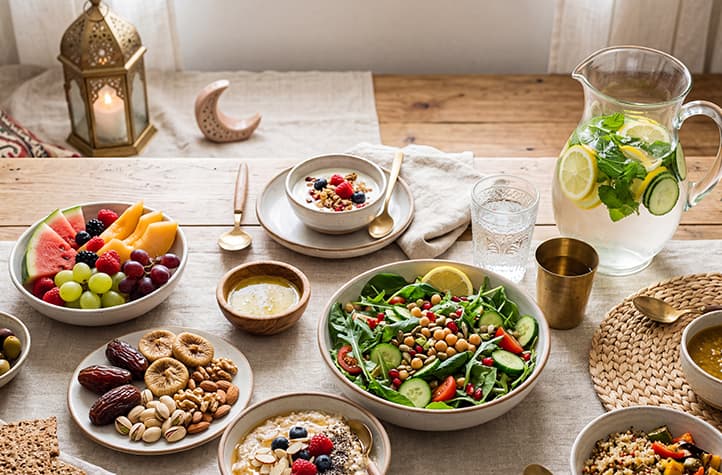
Maintaining healthy bowel movements requires a selection of fibre-rich, water-containing foods during non-fasting hours. These items prevent constipation and support healthy digestion. Some foods that keep bowel movements smooth and reduce bloating or heaviness are listed below:
- Fruits: Bananas, papaya, apples, and pears for natural fibre
- Whole grains: Overnight oats, brown bread
- Vegetables: Spinach, carrots, and beans to aid digestion
- Dates and figs: Gentle natural laxatives
- Fluids: Water and herbal teas for hydration support
While suhoor sets the foundation for your digestive comfort during the day, iftar determines how well your stomach recovers after fasting. Choosing light, balanced foods supports smoother digestion and bowel movements.
Suhoor Diet Tips to Prevent Constipation While Fasting
The pre-dawn suhoor meal plays a key role in preventing constipation during Ramadan. A light, slow-burning meal helps maintain energy and allows easy digestion throughout the fasting hours. Here are some tips for a healthy suhoor:
- • Consume high-fibre foods such as oats or whole grains
- • Add some vegetables or fruit for natural laxatives
- • Make a habit of drinking one to two glasses of water before Fajr
- • Avoiding salty or fried items that cause dehydration
- • Include yoghurt or laban to support gut health
Iftar Food Choices That Support Healthy Digestion
Iftar should gently reintroduce food to your system after long fasting hours. You need to initially prioritise hydrating options to prevent indigestion, bloating, and constipation. Next, you may like to start light with smart iftar choices that include:
- • Start with a few dates to restore energy
- • Consider a serving of soup or vegetable broth before heavier dishes
- • Keep in mind that grilled or baked proteins are a better choice than fried foods
- • You can add digestible fibre, such as steamed or fresh vegetable salads
- • Restrict indulging in sugary desserts and processed/carbonated drinks
Hydration Tips to Improve Digestion During Ramadan
Hydrating well during non-fasting hours will keep your digestive system ready to prevent constipation during fasting. You can choose to replenish fluids between iftar and suhoor, as it supports bowel movement and overall gut health. Stay hydrated with these tips:
- • Sip water slowly and in short intervals between iftar and suhoor
- • Avoid taking too much fluid at once
- • Limit caffeine and carbonated drinks
- • Include soups, milk, and herbal teas
- • Eat water-rich foods like cucumbers, watermelon, and oranges
Lifestyle Habits That Help Relieve Constipation While Fasting
Healthy daily routines are as important as diet when it comes to easing constipation. Small, mindful changes in activity and rest can greatly improve digestion during Ramadan. Try these habits:
- • Take light walks after iftar to stimulate digestion
- • Maintain a consistent sleep schedule
- • Avoid sitting for long periods after meals
- • Manage stress with prayer or breathing exercises
- • Keep meal timings consistent each day.
Foods and Habits That Worsen Constipation During Ramadan
Some common meal choices and fasting habits can make constipation worse. Avoiding them helps your body maintain a natural rhythm and smoother digestion throughout Ramadan. Limit or avoid the following:
- • Fried and oily foods that slow down digestion
- • Refined flour products like white bread or pasta
- • Excess caffeine from tea or coffee
- • Sugary desserts and carbonated drinks
- • Skipping suhoor or eating too quickly at iftar
When Constipation During Ramadan Needs Medical Attention
Most of the constipation cases during Ramadan quickly improve with hydration and dietary changes. However, if you have ongoing or severe symptoms, they may signal an underlying health condition that requires professional care. Seek medical advice if you notice:
- • Persistent constipation for more than a week
- • Severe abdominal pain or bloating
- • Blood in stool or rectal bleeding
- • Unexplained weight loss or fatigue
- • Constipation unrelieved by home remedies.
Role of Gastroenterology Care in Managing Digestive Issues
Persistent digestive issues during Ramadan may need expert evaluation. Consulting the best gastroenterologist in Dubai ensures accurate diagnosis and safe treatment adjustments for fasting individuals. Specialist care can help you:
- • Identify dietary or lifestyle triggers behind constipation
- • Manage medications safely during fasting
- • Receive personalised dietary and hydration plans
- • Screen for chronic digestive conditions if symptoms persist.
The Bottom Line
Preventing constipation during Ramadan starts with mindful eating, regular hydration, and light physical activity. Choose fibre-rich foods, avoid fried meals, and stay active between iftar and suhoor. Schedule an appointment at a reputed gastroenterology hospital in Dubai to ensure asmooth fasting, free of health issues like constipation.
Frequently Asked Questions (FAQs)
1. Why does constipation become common during Ramadan?
Fasting changes meal timings and fluid intake, which can slow digestion. Limited fibre and dehydration often make bowel movements less frequent, leading to mild or temporary constipation.
2. Can fasting worsen existing constipation?
Yes, especially if hydration or fibre intake is low. Eating fresh fruits, vegetables, and whole grains during non-fasting hours can help maintain bowel regularity and comfort.
3. How much water should I drink to prevent constipation while fasting?
Aim for six to eight glasses between iftar and suhoor. Sip slowly and include hydrating foods like soups, cucumbers, and watermelon to restore fluid balance naturally.
4. How to improve digestion when constipated?
Consume dates, figs, papaya, and oats, as these foods are excellent natural laxatives. Pairing them with water and vegetables improves digestion and helps relieve constipation gently during Ramadan.
5. Is it safe to use laxatives while fasting?
Mild, doctor-recommended laxatives may be used after iftar or suhoor if needed. Always consult a healthcare professional before starting or adjusting any medication during fasting.
6. How to stop constipation during Ramadan?
You should consume more high-fibre foods (whole grains, fruits, vegetables), drink at least two litres of water between iftar and suhoor to stop constipation. Moreover, you should stay active with light exercise like walking and avoid fatty, fried, and overly processed foods.
7. What foods worsen constipation?
You should limit consumption of processed foods, refined flour (white bread/pasta), dairy, red meat, and sugary sweets. These foods are low in fibre and high in fat or salt. Moreover, avoid fried items, white rice, and caffeinated drinks.
8. Can exercise help with constipation during fasting?
Yes, exercise is an effective way to relieve constipation during fasting. You should perform physical activity to stimulate intestinal muscles and increase bowel movements, improve blood flow to digestive organs, and reduce stress.
9. When should I consult a gastroenterologist for constipation?
If you experience warning signs like rectal bleeding, unexplained weight loss, or severe abdominal pain while fasting, it is a sign that immediate consultation with a gastroenterologist is required for faster relief.
References
https://applications.emro.who.int/imemrf/jrms_2006_11_3_170.pdf
https://www.medicalnewstoday.com/articles/318630
https://www.nhs.uk/conditions/constipation/
https://www.who.int/news-room/fact-sheets/detail/healthy-diet