

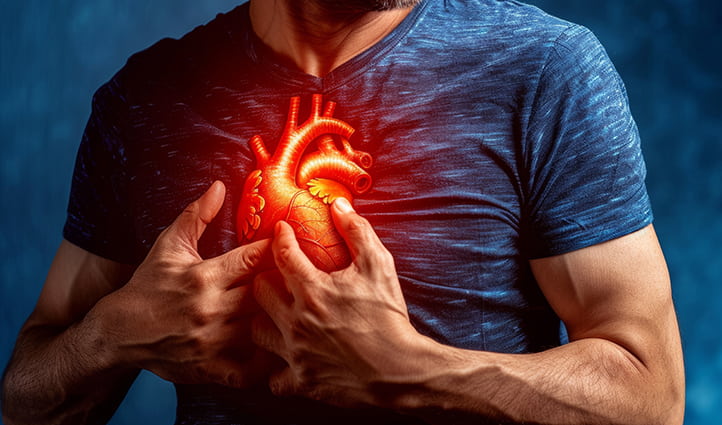
A dull, persistent ache in your chest might not just be a bad case of indigestion or a sign that you have been staring at a screen for too long. It could be your heart sending you a subtle warning sign. When the pathways leading to your heart start getting jammed, the warning signs are usually hard to ignore once you know what to look for.
Heart disease rarely manifests overnight. It is a gradual condition that takes years to progress before you feel significant symptoms. Therefore, understanding what coronary artery blockage is marks the first step to detecting it early and stopping it in its tracks. In this article, we expand on how this blockage happens, what drives it, and the symptoms you should never dismiss.
What is coronary artery blockage?
The heart works as a high-performance engine. It needs a consistent flow of fuel to keep pumping day and night. That fuel is oxygen-rich blood, which is delivered through a set of vessels known as the coronary arteries.
In that context, coronary artery blockage occurs when a clog forms in those vital pipes. Over the years, a steady buildup of cholesterol, fat, calcium, and cellular waste forms on the inner walls of the arteries. This mass is called plaque.
If a piece of that plaque suddenly ruptures, the body tries to heal it by forming a blood clot. That clot can block the artery entirely, shutting off the blood supply to a chunk of the heart muscle. This development can eventually lead to a heart attack.
What causes coronary artery disease?
The causes of coronary artery disease usually come down to a mix of daily habits and genetics. The plaque does not just appear out of nowhere; it results from damage to the inner lining of the artery walls.
When your blood pressure is too high, the bloodstream continues to press on the arterial walls, leaving tiny nicks and tears. Smoking pumps toxic chemicals into your blood that scratch up the arteries, giving cholesterol a rough surface to cling to. High blood sugar from diabetes or insulin resistance also damages the vessel lining.
Once the artery wall is damaged, the bad cholesterol (LDL) particles penetrate the tissues, and plaque begins to build up. Add a sedentary lifestyle and a diet heavy on processed foods, and you have a cascade effect that leads to blocked arteries. If your parents or siblings had heart disease early in life, your genetics might make you more prone to this buildup.
Coronary artery disease types
Not all blockages manifest the same way. Doctors classify coronary artery disease based on how the blockage affects blood flow and how quickly it develops.
Stable Ischemic Heart Disease
This is the chronic, slow-burn version. The arteries narrow but are not completely blocked. You might feel fine while sitting on the sofa, but the moment you climb a steep hill or get stressed, your heart demands more oxygen than the narrowed arteries can deliver. The result is predictable chest pain (angina) that eases up when you rest.
Acute Coronary Syndrome
This condition is a sudden, life-threatening emergency. It happens when a plaque rupture triggers the formation of a blood clot that almost instantly cuts off the blood supply. It can cause unstable angina or a full-blown heart attack.
Coronary artery disease symptoms
Coronary artery disease symptoms can be apparent or subtle. A lot of people live their daily lives with this condition, and often have absolutely no idea until they experience heart issues. When your heart does start complaining, you might feel:
Angina: The classic symptom. It feels like a heavy weight, a tight band, or a squeezing pressure right in the centre or left side of your chest.
Radiating pain: The discomfort does not always stay in the chest. It can shoot up into your neck, jaw, teeth, or shoulders, and often travels down the left arm.
Shortness of breath: If your heart is unable to meet your body’s blood supply demands, you may find yourself panting for air during everyday tasks.
Severe fatigue: A bone-deep exhaustion that hits you out of nowhere, particularly common in women.
Nausea or cold sweats: Breaking out in a sudden, clammy sweat or feeling sick to your stomach, along with chest discomfort.
Moreover, in this condition, patients might feel an overwhelming wave of exhaustion, severe indigestion, or a strange ache in the jaw. If something feels fundamentally wrong, trust your instincts.
How is coronary artery disease diagnosed?
Diagnosis of coronary artery disease involves a combination of advanced imaging and stress testing to determine exactly what is happening inside the arteries.
- Electrocardiogram (ECG)
- Stress Test
- Echocardiogram
- Coronary Angiogram
The Bottom Line
If your heart is sending warning signs or if you have a family history that worries you, sitting tight is the worst thing you can do. Getting assessed by the best cardiologist in Dubai gives you a clear picture of your heart health and a solid plan to protect it.
At Aster Hospitals, we take a deeply personal approach to cardiac care. We do not just look at the test results; we look at you: your lifestyle, your stress, your habits. Our team uses the latest diagnostic technology to detect blockages early, before they cause a crisis. It is this combination of world-class expertise and genuine patient care that ranks us among the best cardiology hospitals in Dubai for managing heart disease.
Do not wait for a small blockage to become a massive emergency. Listen to your heart and seek timely care if you experience symptoms.
FAQs
Can you have a blocked artery with no symptoms?
Yes, plaque can build up for years without causing pain or shortness of breath. This state is called silent ischemia, and it is why routine check-ups are vital for conditions such as high cholesterol or high blood pressure.
Is coronary artery blockage reversible?
Completely dissolving the plaque is often not feasible, but you can stop it from getting worse. Aggressive lifestyle changes and medication can shrink the plaque and stabilise it, making a heart attack much less likely.
What is the difference between angina and a heart attack?
Angina is temporary chest pain from a narrowed artery that cannot keep up during physical exertion. It eases within minutes once you stop. A heart attack is different: the artery is completely blocked, the pain doesn't let up with rest, and without prompt treatment, the heart muscle starts to die.
When should I go to the hospital for chest pain?
You should visit a cardiologist immediately if you have sudden, heavy chest pain, pain radiating to your jaw or arm, or shortness of breath that does not go away after a few minutes of resting. Contact your doctor at the earliest if you experience chest pain, as it could be a medical emergency.