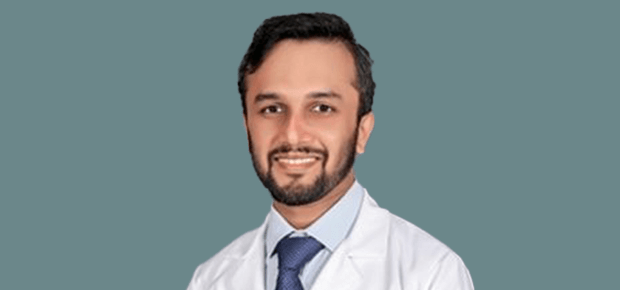


Consultant Interventional Cardiologist
Aster Hospital, Qusais
Aster Hospital, Mankhool
We are proud at Aster Hospitals to be the first choice for cardiology in Dubai. We have the best cardiologist in Dubai who offers the whole range of services from non-invasive cardiology and intervention to preventive check-ups and treatment of heart failure.
Our team of cardiologists is ready to offer the latest treatment techniques, including:
New Catheterization techniques
Minimally invasive cardiac interventions
From a regular check-up of the heart to complex heart surgery, our experts at Aster Hospital work towards better lives, better hearts, and the best possible outcome for every single patient.
Our cardiologists at Aster Hospital listen to your symptoms, watch your condition closely, and use the latest diagnostic equipment to diagnose any problems with your heart at its earliest stage.
Our department of cardiology provides various specialisations:
Non-Invasive Cardiology: We provide all types of non-invasive investigations such as ECG, Holter, ambulatory blood pressure, stress test, cardiac coronary CT scan, and cardiac MRI to detect and diagnose cardiac disease at the earliest possible moment.
Interventional Cardiology: Our professionals are well-experienced with minimally invasive techniques such as coronary angiography, coronary angioplasty with stent (even biodegradable stent), pacemaker, AICD and CRT device implant, and other sophisticated structural heart procedures like TAVR.
Cardiothoracic: Our professionals deliver excellence in cardiac and chest surgery, such as coronary artery bypass grafting, heart valve replacement, treatment of aortic dissection, and minimally invasive cardiac surgery by adopting the latest practices.
Preventive Cardiology & Heart Check-ups: We encourage early detection, lifestyle advice, and regular check-ups to become the master of your heart and avoid likely cardiac disease.
24/7 Cardiac Emergency Treatment: We provide our new 24/7 cardiac emergency treatment and offer immediate life-saving cardiac emergency treatment whenever necessary.
Your body is your constant companion. Repairing whatever is ailing it at the early stages can be a life-saving choice. If you or a member of your family experiences chest pain, shortness of breath, or an irregular rhythm, you need to see a cardiologist.
Early detection of symptoms in the case of a heart condition can make all the difference with treatment and diagnosis. Here are some problem signs to look out for:
Discomfort or pain in the chest
Shortness of breath
Fainting or dizziness
Palpitations or irregular heart rhythm
Swollen legs, ankles, or feet that don't get better
Fatigue
Hypertension
Unexplained heat and sweating
Back, neck, jaw, or shoulder pain or discomfort
Blue skin (cyanosis)
Our cardiologists at Aster Hospitals diagnose and treat many of the common and uncommon heart ailments and diseases. We offer the latest and patient-centred treatment by the best cardiologist doctor in Dubai for:
Coronary Artery Disease (CAD): Constriction of the coronary arteries due to plaque accumulation causing angina or heart attack.
Heart Failure: Here, the heart is not strong enough to pump blood to keep a patient weak, puffed up, and panting.
Irregular Heartbeat (Arrhythmias): They are deviations that disturb the heartbeat and make it slower or faster than usual.
High Blood Pressure (Hypertension): Also known as the silent killer, high blood pressure is an arteriosclerotic risk factor for heart attack, stroke, and kidney disease.
Valvular Heart Disease: Pathologic functioning of the heart valve, i.e., contraction or leakage through the mitral valve, susceptible to retrograde flow, very prevalent as a silent killer.
Congenital Heart Defects (CHD): They are congenital defects of the heart, where abnormal ones need to be addressed in children and adults.
Cardiomyopathy: It is disease of the cardiac muscle that leads to failure of the heart to pump blood and lead to heart failure.
Pericarditis: It is pericardium inflammation and can lead to chest pain and fluid buildup.
Myocardial Infarction (Heart Attack): Blocked coronary arteries, which impair heart blood supply and hence must be treated urgently.
Peripheral Artery Disease (PAD): It is a peripheral narrowing of arteries from the heart, most often of arms and legs, resulting in pain, numbness, or decreased flow of blood.
Rheumatic Heart Disease: It is caused by valve of the heart damage due to chronic streptococcal infection or rheumatic fever.
Aortic Aneurysm & Dissection: They are fatal diseases if not attended to in which the aorta becomes torn or ruptured and must be treated on emergency basis.
With over 3 decades of experience in the healthcare industry, Aster Hospitals Dubai provides world-class cardiology services with cutting-edge technology and highly skilled cardiologists and surgeons. From heart check-ups to life-saving surgeries, we provide end-to-end personalised care with you as our sole priority. We provide 24/7 emergency cardiac care with quick response, and our multi-disciplinary team includes cardiologists, dieticians, and physiotherapists to provide complete heart care.
Our Cardiology department in Aster Hospitals is all about ensuring that you have your own tailor-made care for your heart. Be it preventive checks to advanced operations by our competent cardiac experts, all is amicably arranged.
24-Hour Electrocardiogram (ECG)
24-Hour Holter Monitoring
Echocardiography (2D, 3D, Doppler & Stress Echo)
Cardiac MRI & CT Angiography
Treadmill Test (TMT/Stress Test)
Blood Tests for Cardiac Biomarkers
Percutaneous Coronary Interventions-Angioplasty & Stent Placement
Cardiac Catheterisation (Cath Lab)
Pacemaker & ICD Implantation
Balloon Valvuloplasty
Atherectomy
TAVI
Coronary Artery Bypass Grafting (CABG)
Heart Valve Repair & Replacement
Aneurysm Repair
Congenital Heart Defect Surgery
Heart Transplant
Minimally Invasive Surgeries
Basic & Advanced Heart Check-ups
Hypertension & Cholesterol Management
Diabetes and Heart Disease Screening
Post-Cardiac Surgery Rehabilitation
And never forget that we are always by your side, 24/7, through our Emergency and Critical Cardiac Care, i.e.:
Emergency Heart Attack Treatment
Well-supported ICU & CCU Services
Cardiac Arrest and Stroke Management
At Aster Hospitals with us, our Cardiology Team is committed to place the patient at the center and collaborate with other specialists for treatment. Our master cardiologists are assisted by an diverse team of specialists like heart surgeons, radiologists, pathologists, and endocrinologists, to provide you with the whole cardiac experience.
Collaborative work leads to quicker results and more accurate diagnosis, appointment making, and quicker treatment. Our treatment options are:
Dietary Modification: We provide individualised meal planning, body exercises, and healthy lifestyles which allow you to assume responsibility and build heart wellness.
Specific Drugs: Our drugs are well trained and specifically formulated to regulate blood pressure, lower cholesterol, and slow arrhythmias very effectively.
Surgery Treatment: In advanced illness, we provide the latest treatment like bypass surgery, valve or heart valve replacement or implantation, and device implantation into the heart.
Cardiac Rehabilitation Programs: The programs provide increased cardiovascular ability, recovery of energy levels, and prevention of future cardiovascular disease.
Recovering from cardiology surgery might be quite different—if you've had a minimally invasive procedure like an angioplasty, you might walk in days. If you've had an open-cardiac procedure like bypass or valve replacement, though, it might be 4 to 6 weeks before you can get around like you used to.
During this recovery time, it's important to adhere to a heart-healthy diet, follow your medications as instructed, and participate in light activities as directed by your physician. Regular follow-up appointments are key to keeping an eye on your progress, and with the right care, you’ll be able to get back to your daily routine with a healthier heart.
Cardiologist is the doctor who, through medical treatment, diagnoses and heals heart disease, i.e., hypertension, heart attack, and arrhythmia. A cardiac surgeon is the surgeon who carries out operation on and inside the heart, i.e., bypass operations.
Don't eat processed foods, trans fat, salt, and sweet drinks should be consumed with care if one wants to have a healthy heart.
Yes! Stress and anxiety may cause high blood pressure and heart diseases.
If you are over 40 years old or if you have risk factors like diabetes, high blood pressure, or heredity of heart disease, it would be better if you went for a checkup annually.
Yes, heart disease runs in the family. If you do pay attention to your body and get your regular checkups, you can take a lot of that risk out.
Having a good diet, regularly exercising, not smoking are a few healthy habits for a good heart. Prevention is difficult if there is a genetic factor to consider. Meet your cardiologist regularly for checkups.
Early diagnosis and treatment of heart disease will relieve you from experiencing life-threatening disorders such as heart attack, cardiac death, stroke, and cardiac failure.
Failing to treat heart disease will leave you vulnerable to facing episodes of suffering heart attacks, stroke, and even cardiac arrest to a large extent.
Now the experts have provided the assessment that 1 out of every 5 individuals below 40 years of age is prone to heart attacks. With the practice of inactive lifestyle and junk food culture, along with other tendencies and genetic disorders, more cardiac ailments have become common among the youth.
Last updated: 10-02-2026
Consuming a low-fat and low-sodium diet, getting at least 30 minutes of moderate exercise on most days of the week, quitting smoking and limiting alcohol.
If lifestyle changes aren’t adequate, you may be prescribed medications to control your heart disease. Heart disease treatments vary by condition. For instance, if you’re diagnosed with a heart infection, you’ll likely be given antibiotics. The type of medication will completely depend upon the type of heart disease. Medications will also be prescribed if you have heart attack symptoms.
You may be recommended specific medical procedures or surgeries. The type of procedure will depend on the type of heart ailment and the extent of the damage caused to your heart due to coronary artery disease.
Consuming a low-fat and low-sodium diet, getting at least 30 minutes of moderate exercise on most days of the week, quitting smoking and limiting alcohol.
If lifestyle changes aren’t adequate, you may be prescribed medications to control your heart disease. Heart disease treatments vary by condition. For instance, if you’re diagnosed with a heart infection, you’ll likely be given antibiotics. The type of medication will completely depend upon the type of heart disease. Medications will also be prescribed if you have heart attack symptoms.
It’s possible you will be recommended specific medical procedures or surgeries. The type of procedure will depend on the type of heart ailment and the extent of the damage caused to your heart due to coronary artery disease.
Consuming a low-fat and low-sodium diet, getting at least 30 minutes of moderate exercise on most days of the week, quitting smoking and limiting alcohol.
If lifestyle changes aren’t adequate, you may be prescribed medications to control your heart disease. Heart disease treatments vary by condition. For instance, if you’re diagnosed with a heart infection, you’ll likely be given antibiotics. The type of medication will completely depend upon the type of heart disease. Medications will also be prescribed if you have heart attack symptoms.
It’s possible you will be recommended specific medical procedures or surgeries. The type of procedure will depend on the type of heart ailment and the extent of the damage caused to your heart due to coronary artery disease.
Consuming a low-fat and low-sodium diet, getting at least 30 minutes of moderate exercise on most days of the week, quitting smoking and limiting alcohol.
If lifestyle changes aren’t adequate, you may be prescribed medications to control your heart disease. Heart disease treatments vary by condition. For instance, if you’re diagnosed with a heart infection, you’ll likely be given antibiotics. The type of medication will completely depend upon the type of heart disease. Medications will also be prescribed if you have heart attack symptoms.
It’s possible you will be recommended specific medical procedures or surgeries. The type of procedure will depend on the type of heart ailment and the extent of the damage caused to your heart due to coronary artery disease.
Consuming a low-fat and low-sodium diet, getting at least 30 minutes of moderate exercise on most days of the week, quitting smoking and limiting alcohol.
If lifestyle changes aren’t adequate, you may be prescribed medications to control your heart disease. Heart disease treatments vary by condition. For instance, if you’re diagnosed with a heart infection, you’ll likely be given antibiotics. The type of medication will completely depend upon the type of heart disease. Medications will also be prescribed if you have heart attack symptoms.
It’s possible you will be recommended specific medical procedures or surgeries. The type of procedure will depend on the type of heart ailment and the extent of the damage caused to your heart due to coronary artery disease.
Consuming a low-fat and low-sodium diet, getting at least 30 minutes of moderate exercise on most days of the week, quitting smoking and limiting alcohol.
If lifestyle changes aren’t adequate, you may be prescribed medications to control your heart disease. Heart disease treatments vary by condition. For instance, if you’re diagnosed with a heart infection, you’ll likely be given antibiotics. The type of medication will completely depend upon the type of heart disease. Medications will also be prescribed if you have heart attack symptoms.
It’s possible you will be recommended specific medical procedures or surgeries. The type of procedure will depend on the type of heart ailment and the extent of the damage caused to your heart due to coronary artery disease.