


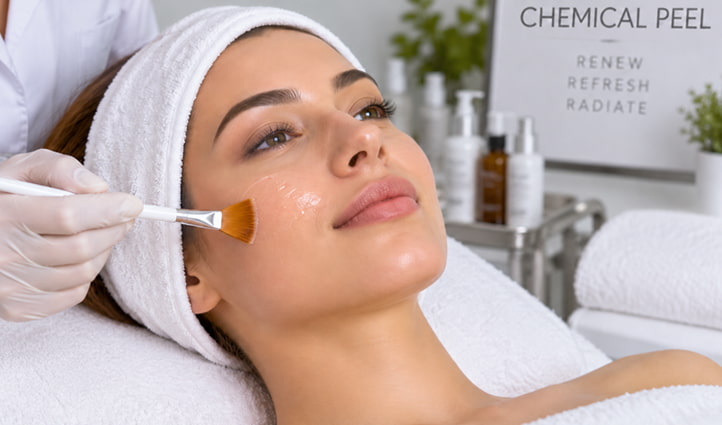
Chemical peels are a common cosmetic dermatology treatment. While they often target harmless concerns like mild uneven skin tone, they can also treat serious issues. These include precancerous growths or severe acne scarring. As the types vary widely, it is not always possible to determine the right peel based on symptoms alone.
The nature of the skin damage, its depth, and whether it is associated with redness provide important information about the root cause. However, only a medical assessment can accurately identify the condition and determine whether a chemical peel is required.
Recognising the difference between superficial peels and other complications can prevent permanent skin damage. In this article, we will highlight the types, outline the process, benefits, and discuss recovery and safety.
What Is a Chemical Peel?
A chemical peel is a skin-resurfacing procedure. It uses a chemical solution to exfoliate the damaged outer layers. The skin that regenerates is smoother and younger-looking. The face is the most common treatment area.
However, peels also treat the neck and hands, as the skin is the body's largest organ. Hence, dermatologists take this procedure seriously until they have ruled out the risks of scarring. A chemical peel accelerates natural exfoliation. It reveals the healthier skin hidden beneath.
Choosing the Right Type of Chemical Peel
Different types of chemical peels point to different medical and cosmetic needs. Knowing the common categories helps patients recognise when professional care is needed.
- Superficial Peels: These peels use mild acids such as alpha-hydroxy acids. They gently peel the outer layer of skin. They treat mild discolouration and rough texture. Recovery is rapid in superficial peels.
- Medium Peels: These use trichloroacetic acid or stronger glycolic acid. They reach the middle and outer skin layers. They are used to remove age spots, moderate wrinkles, and precancerous patches.
- Deep Peels: Phenol is used in this peel. They deeply penetrate the middle skin layer. They address severe sun damage and deep wrinkles. It requires significant recovery time.
Common Signs & Symptoms Treated by Chemical Peels
- Acne along with blackheads
- Acne scarring and post-inflammatory marks
- Fine lines around the eyes and mouth
- Sun damage and age spots
Deeper peel symptoms generally involve more intense peeling. This is a useful, though not definitive, distinguishing clue.
Benefits of Chemical Peel
The chemical peel benefits extend beyond cosmetic improvement. They offer therapeutic advantages that improve skin health.
- Enhanced Texture: Peels remove dead skin cells. This reveals brighter, softer skin underneath.
- Acne Reduction: They unclog pores and reduce active breakouts. Salicylic acid peels are highly effective for this.
- Fading Hyperpigmentation: Peels lighten dark spots and melasma. They promote a balanced skin tone.
- Collagen Stimulation: Medium and deep peels help the body's healing response. This boosts collagen and reduces fine lines.
If skin damage is left untreated, conditions can worsen. Direct and long-term sun exposure can turn precancerous spots into skin cancer. Severe acne can cause deep scarring.
The Process of Chemical Peel: Step-by-Step Guide
The chemical peel process follows strict clinical protocols. Knowing the steps helps patients prepare for better treatment.
- Consultation: A dermatologist evaluates the skin. They review medical history and discuss goals.
- Preparation: Patients may use specific topical products weeks before. Retinoids prime the skin for an even peel.
- Cleansing: The doctor thoroughly cleans the skin. They remove all oils, dirt, and makeup.
- Application: The chemical solution is applied using a small brush or sponge. A tingling or mild burning sensation is common. The doctor monitors the skin closely.
- Neutralisation: The acid is neutralised with a specific solution or water. This stops the chemical reaction. A soothing ointment or cold compress is then applied.
Your medical history provides valuable information. It helps doctors identify possible risk factors, such as cold sore triggers.
What to Expect After a Chemical Peel
Chemical peel recovery varies based on the depth of the treatment. Proper aftercare is crucial for optimal results.
- Superficial Peel: The skin may show mild redness. Slight flaking occurs within a few days. Normal activities resume immediately.
- Medium Peel: Swelling and redness are expected. The skin forms brown crusts. Peeling occurs over seven to fourteen days. Downtime is typically a week.
- Deep Peel: This requires two to three weeks of downtime. The skin will be swollen and crusted. Strict medical follow-up is essential.
- Aftercare Rules: Patients must avoid direct sun exposure. Applying a broad-spectrum sunscreen daily is mandatory. Picking at peeling skin causes scarring. Keeping the skin moisturised aids healing.
Are Chemical Peels Safe? Understanding the Risks
Chemical peels are usually safe when performed by a qualified dermatologist. However, they carry risks if done incorrectly.
- Redness and Irritation: This is a normal, temporary side effect. It subsides as the skin heals.
- Scarring: A deep peel or poor wound care can cause permanent scars.
- Colour Changes: Peels can cause hyperpigmentation or hypopigmentation. This risk is higher if you have darker skin tones.
- Organ Risks: Deep peels using phenol can affect the heart. Doctors must monitor the heart rate closely.
At-home peels carry higher risks of chemical burns. However, a proper, professional assessment significantly minimises these risks.
The Bottom Line
A chemical peel is not always a medical emergency, but it should never be taken lightly. Some minor at-home peels can cause similar symptoms to a professional treatment, but with higher risks. For this reason, it is difficult to identify the right peel based on skin type alone. While the type of skin damage may provide useful clues, only a medical assessment can determine the exact treatment needed.
Patients should seek professional care immediately if they experience severe burning or unexpected blistering after a peel. These require urgent attention from an experienced and board-certified dermatologist in Dubai.
If you are looking for a dermatology hospital in Dubai, find one equipped with advanced diagnostics and sterile treatment rooms. At Aster Hospitals Dubai, patients get comprehensive dermatology care using the latest clinical protocols. They evaluate and treat skin conditions accurately.
Frequently Asked Questions
What are the common types of chemical peels?
The three main types are superficial, medium, and deep peels. Superficial peels use mild acids. Medium peels target more serious damage. Deep peels address severe wrinkles and scars.
How long does chemical peel recovery take?
Recovery depends on the peel depth. A superficial peel takes one to seven days. A medium peel takes seven to fourteen days. A deep peel requires two to three weeks.
Are chemical peels safe for darker skin?
Yes, when performed by an expert. However, darker skin carries a higher risk of post-inflammatory hyperpigmentation. A dermatologist must carefully select the correct acid.
Can I do a chemical peel at home?
At-home peels are much weaker than professional treatments. Using strong acids at home risks chemical burns and permanent damage. Always consult a dermatologist first.
What conditions does a chemical peel treat?
Chemical peels treat acne, fine lines, sun damage, melasma, and precancerous skin growths. They improve overall skin texture and tone.