


Bringing a new baby home is a whirlwind of emotions. You are dealing with sleep deprivation, learning how to feed a tiny human, and probably staring at your baby for hours, making sure they are breathing. Then, a few days in, you notice a yellowish tint creeping across their face and the whites of their eyes. Panic sets in, but before you let fear take over, let's understand the condition.
That yellowing is called jaundice, and it is incredibly common. In fact, most newborns experience some level of it. Understanding jaundice in newborns helps you know when to relax and when it is time to call the doctor.
What is Newborn Jaundice?
Jaundice is simply a build-up of a yellowish substance called bilirubin in your baby's blood. When babies are in the womb, they need extra red blood cells to carry oxygen from the placenta. Once they are born and breathing on their own, they do not need all those extra cells. Their bodies start breaking them down. Bilirubin is the byproduct of this breakdown.
Normally, the liver filters bilirubin out of the blood and passes it into the intestines to be removed from the body. However, a newborn's liver is still waking up and getting used to the job. It is a bit slow and inefficient in those first few days. When the liver cannot keep up, bilirubin builds up in the blood. Eventually, the bilirubin gets deposited in the skin and eyes, causing that familiar yellow tint.
Symptoms of Jaundice in a Newborn Baby
The most obvious symptom of jaundice in a newborn baby is the yellowing of the skin and the whites of the eyes. It usually starts on the face and then moves down to the chest, tummy, and legs as bilirubin levels rise.
A good way to check at home is to gently press on your baby's forehead or nose in natural daylight. If the skin looks yellow when you release the pressure, it is worth checking with your doctor. Beyond the visual signs, a baby with higher bilirubin levels might be very sleepy, difficult to wake for feeds, or not feeding well. They might also have dark yellow urine or pale-coloured poo, which means the bilirubin is not being cleared out properly.
Causes of Jaundice in Newborn
The primary reason for jaundice in newborn babies is simply their immature liver. This is called physiological jaundice and is entirely normal. It typically shows up on day two or three of life and resolves on its own within a week or two.
However, there are other causes of jaundice in newborns that are not just about a sleepy liver. Suppose a baby is not taking in enough milk, whether breastmilk or formula, they will not produce enough dirty nappies to flush the bilirubin out. This is often called breastfeeding jaundice. It is not the breastmilk itself causing the issue; it is the lack of volume. The more your baby eats, the more they poop, and the faster the bilirubin leaves the body.
Sometimes, there is a mismatch between the mother's blood type and the baby's blood type. If the mother's immune system makes antibodies that attack the baby's red blood cells, those cells break down much faster, flooding the baby's system with bilirubin. This is a more serious cause that requires immediate medical attention.
Types of Jaundice in Newborn
Doctors categorise the condition based on what is causing the build-up and when it starts. Knowing the types of jaundice in newborns helps paediatricians figure out the best treatment:
Physiological Jaundice: The most common type, caused by the normal slow-down of a newborn's liver. It peaks around day three to five and goes away naturally.
Breast Milk Jaundice: This is different from breastfeeding jaundice. Around a week or two after birth, some substances in the breastmilk can actually block the liver from breaking down bilirubin. It is harmless and usually clears up on its own, but it can last for several weeks.
Pathological Jaundice: If jaundice appears within the first 24 hours of life, it is almost always pathological. It means there is an underlying issue, like a blood type incompatibility, a liver problem, or an infection. This requires fast, aggressive treatment.
Can Jaundice Come Back in Newborns?
A common worry for parents is whether jaundice can come back in newborns. Once the bilirubin levels drop and the jaundice fades, it usually does not return. However, if there is an underlying medical issue that was not resolved, like a persistent blood mismatch or a problem with the way the baby metabolises breastmilk, the levels could creep back up. If your baby's skin starts looking yellow again after it has cleared, or if they become reluctant to feed, you need to get them checked out immediately.
When to Seek Help
If your baby is diagnosed with jaundice, your paediatrician will tell you what to watch for. But you should reach out for medical advice straight away if:
- The yellow colour spreads to your baby's tummy, arms, or legs.
- The whites of their eyes look very yellow.
- Your baby is extremely sleepy and hard to wake for feed.
- They are not having enough wet or dirty nappies.
- Your baby has a high-pitched cry or seems very weak.
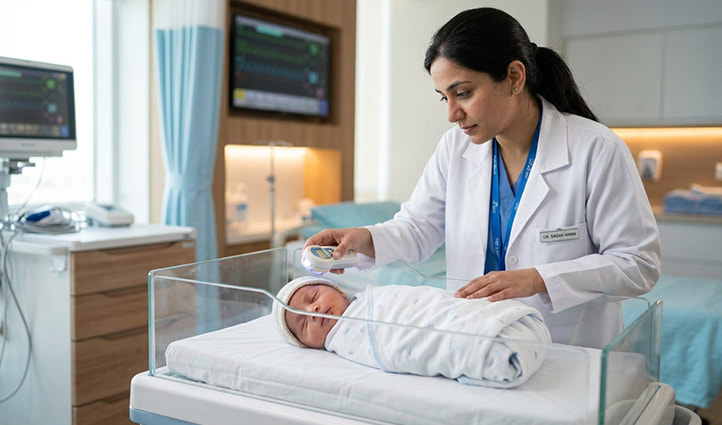
If you are in the UAE, seeking care at one of the well-equipped pediatric hospitals in Dubai, like Aster Hospitals, is the best course of action. They can do a quick blood test or use a light meter on the skin to get an accurate bilirubin reading. If levels are high, they will start treatment right away.
Having the best pediatric doctor in Dubai evaluate your baby ensures that even if it is just normal physiological jaundice, you rest assured knowing a specialist is keeping an eye on the condition.
Do not let jaundice steal the joy of your first few weeks with your baby. Stay observant, keep feeding your baby often, and trust your gut. If the colour does not look right, get it checked. It is always better to be safe.
FAQs
How long does newborn jaundice usually last?
In most babies, physiological jaundice peaks around days three to five and clears up within a week or two. Breast milk jaundice tends to hang around three weeks or more in some cases.
Does phototherapy hurt my baby?
Not at all. Phototherapy is painless. Your baby will wear protective eye shields, and their nappy will be left loose so the light can reach as much skin as possible.
Can I continue breastfeeding during jaundice treatment in Dubai?
Yes, absolutely. Feeding your baby frequently helps flush out the bilirubin. Doctors encourage you to keep breastfeeding unless they specifically advise otherwise due to an underlying issue.
When is jaundice considered dangerous?
Jaundice is dangerous if it appears within the first 24 hours of life. The same goes for very high bilirubin levels, or a baby who's unusually drowsy and not feeding properly. In any of these situations, get medical help without delay.