


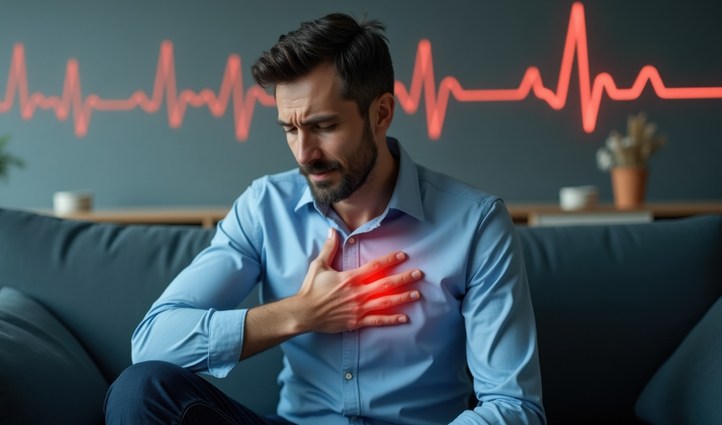
You are sitting at your desk, watching television, or trying to get some rest, and suddenly it hits you. It feels like your heart is on overdrive, fluttering, pounding, or skipping a beat entirely. That sudden awareness of your own heartbeat can cause significant concern.
Most of the time, that sudden racing or thumping is harmless and passes in a few seconds. But sometimes, your body is trying to tell you that something is not quite right. Let's understand why your heart might be acting up, when you should brush it off, and when you need to pay closer attention.
What are Heart Palpitations?
If you have ever asked yourself, what are heart palpitations, the answer is surprisingly simple. They are just the feeling that your heart is beating too hard, too fast, skipping a beat, or fluttering. Usually, your heart pumps away in the background without you even noticing. When you do notice it, that awareness is what doctors call a palpitation.
It is important to understand that a palpitation is a symptom, not a disease itself. It is not the same thing as an arrhythmia, which is an actual abnormal heart rhythm diagnosed on a monitor. A palpitation is simply how you experience your heartbeat. You might feel it in your chest, but some people also feel it in their throat or neck. It can happen when you are active, resting, or just going about your day.
Heart Palpitations Symptoms
While the main event is an apparent pounding or racing of the heart, heart palpitations can feel a bit different for everyone. You might experience a flip-flopping sensation in your chest, almost like a missed step. Some people describe it as a heavy, forceful thud, while others feel their heart racing for no reason. Occasionally, it feels like your heart pauses for a second, followed by a strong, thumping beat.
Usually, these feelings come and go quickly. However, if these sensations are accompanied by dizziness, shortness of breath, chest discomfort, or fainting, it is no longer something just to watch and wait on. Those additional signs point to a more serious problem that requires immediate medical attention.
What Causes Heart Palpitations?
Some everyday triggers can send your heart into a temporary rush. When investigating the causes of heart palpitations, doctors usually start with lifestyle factors before considering medical issues.
Caffeine and Energy Drinks: That double espresso or pre-workout drink can be a common trigger. Caffeine is a stimulant that speeds up your nervous system, which can easily make your heart race.
Stress and Anxiety: When you are stressed, your body releases adrenaline, which is your fight-or-flight hormone. It prepares you to run from danger, but if there is no actual danger, that adrenaline just sits in your system, making your heart pound.
Dehydration: When you do not drink enough water over time, your blood volume drops. Your heart has to work harder and beat faster to pump the reduced amount of blood around your body.
Hormones: Women often notice their heart acting up during their menstrual cycle, pregnancy, or menopause due to fluctuating oestrogen levels.
Medications: Certain over-the-counter cold medicines containing pseudoephedrine, asthma inhalers, and some thyroid medications can trigger heart palpitations as a side effect.
Then there are the medical reasons for heart palpitations. An overactive thyroid, low blood sugar, anaemia, or an electrolyte imbalance can all throw your heartbeat off rhythm. In some cases, the cause is an actual electrical issue in the heart, like atrial fibrillation.
Are Regular Heart Palpitations Normal?
A lot of people experience a skipped beat or a flutter once in a while, and it is not uncommon. But what if it occurs all the time? Dealing with regular heart palpitations is a different story.
If you notice palpitations daily or ones that persist for more than a few minutes at a time, they are not normal. Disrupted sleep and background anxiety are the more immediate consequences. The longer-term concern is more serious. Sustained irregularities in heart rhythm can increase the risk of blood clots and, over time, contribute to heart failure.
If your heart is constantly experiencing extra beats or racing without a clear trigger, such as exercise, stress, or caffeine, it needs medical attention.
Getting the Right Diagnosis and Care
If you are dealing with a heartbeat that keeps fluctuating, you need to find out its root cause. Diagnosing palpitations can be tricky because they often come and go, meaning they might not happen while you are actually at the doctor's office.
This is an instance where seeing the best cardiologist in Dubai makes all the difference. They have the tools to make an accurate diagnosis of palpitations. They might have you wear a Holter monitor, i.e., a small, portable device. It records your heart's rhythm for 24 to 48 hours while you go about your normal life. For less frequent symptoms, one can wear an event recorder for a month. Doctors also conduct blood tests to check thyroid, electrolyte, and iron levels, ruling out hidden causes.
The Bottom Line
Choosing to get evaluated at one of the best cardiology hospitals in Dubai, Aster Hospitals, means you have access to a multi-speciality medical team, as well as advanced diagnostic equipment. They will quickly figure out whether your palpitations are just a nuisance or require targeted treatment.
Sometimes, the solution can be as simple as easing up on caffeine and finding better ways to handle stress. In other cases, medication may help keep your heart rhythm steady and comfortable. If palpitations start affecting your sleep, daily routine, or peace of mind, you should contact an experienced cardiologist immediately.
Do not let a thumping heart keep you up at night or stop you from living your life. The right care can help you feel calm, confident, and like yourself again.
FAQs
Can what I eat really cause my heart to race?
Heavy, salty, or sugary meals are known to cause palpitations. Caffeine directly affects heart rate. Moreover, food sensitivities or high amounts of MSG can also trigger fluttering in your chest.
How do I address heart palpitations when they occur?
Try taking slow, deep breaths, bearing down as if you are having a bowel movement, or splashing ice-cold water on your face. These tricks stimulate the vagus nerve, which can help slow a racing heart back down to a normal pace.
Can lack of sleep cause palpitations?
Definitely, when you are exhausted, your nervous system becomes imbalanced, leading to elevated stress hormone levels. This overstimulation can easily cause your heart to skip beats or pound while you are trying to rest.
Will my palpitations go away on their own?
If caused by temporary things like stress, caffeine, or lack of sleep, they usually go away once the trigger is removed. However, if they are caused by an underlying medical or heart condition, they will likely continue until you get the right treatment.