

Aster Hospital logo  0
  • Patient Portal
  • Appointments
  • Specialities
  • Facilities
    • myAster
    • Emergency Services
    • ICU & NICU
    • MVT -Brochure
    • Orthopaedic
    • Hospital Rooms
    • Operation Theatre
    • Cardiac Catherization Lab
    • Aster Day Surgery Centre
    • Pharmacy
    • Aster Preventive Health Check
    • FAQ’s – Health check
    • Aster Clinic
    • Plan your visit
    • Aster Nuture
    • Aster Integrated Liver Clinic
    • PCOS (Polycystic ovarian syndrome) Clinic
    • GERD Clinic
  • Locations
  • International Patients
    • UK Patients
    • Turkey Patients
    • Russia Patients
    • Tanzania Patients
    • Nigeria Patients
  • AlTadrib (The Training)
(+971) 44 400 500
Switch to Arabic

About Us

  • About Aster
  • Chairman’s Message
  • Vision Values and Promise
  • Executive Management
  • Careers
  • Aster Volunteers
  • Our New Earth
  • Bio-Medical Waste Report
  • HSE Policy Statement

Newsroom

  • Events and News
  • Patient Testimonials
  • Health Library
  • Campaigns

Patient Guide

  • Admission and Discharge
  • Insurance
  • Guidelines for Patients & Attendants
  • Patients Rights and Responsiblities
  • Privacy Policy
  • International Patients
  • Specialty Doctors
Book an Appointment
Home Care
Specialisations

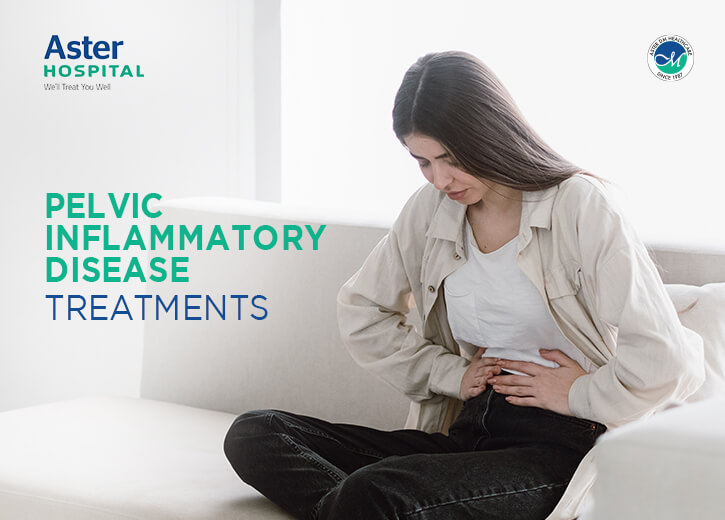
Pelvic inflammatory disease treatments in Dubai

Updated On: 13/03/2026
Pelvic Inflammatory Disease
Obstetrics and Gynecology
Facebook X / Twitter LinkedIn WhatsApp

What is pelvic inflammatory disease? - 

It is an infection of the female reproductive organs. The primary cause of this condition is sexually transmitted infections. Furthermore, women with the pelvic inflammatory disease can experience mild or subtle symptoms. Sometimes, there are no symptoms at all.  

Common symptoms include stomach pain, lower abdominal pain, and vaginal discharge. A woman may not experience the disease until she has pregnancy issues or develops chronic pelvic pain. Aster Hospitals is one of the best hospitals in Dubai for pelvic inflammatory disease treatment.  

Effects of pelvic inflammatory disease 

It can trouble the reproductive system, including the fallopian tube, uterus, and ovaries. Pelvic inflammatory disease can be painful and hinder pregnancy. Moreover, it can cause an infection known as a tubo-ovarian abscess. 

What are the causes of pelvic inflammatory disease? 

Various bacteria cause the disease. Unprotected sex is the main factor in the development of bacteria. These are the most common types of bacteria: 

  • Gonorrhoea 

  • Chlamydia infections 

Furthermore, the bacteria can enter the reproductive tract if the cervix causes any problem. The condition can affect these situations:

  • Menstruation 

  • Miscarriage 

  • Abortion 

  • Delivery  

In rare cases, the bacteria can affect the reproductive tract through the usage of an intrauterine device. It is a long-term birth control method. 


Here are some of the common the risk factors:  

These factors might increase the risk of experiencing pelvic inflammatory disease:

  • If a younger woman less than 25 years old is sexually active  

  • Women with multiple sex partners 

  • Unprotected sex 

  • A woman who has a history of STD or pelvic inflammatory disease 

  • Douching  


What are the primary symptoms? 

  • Lower Abdominal pain or stomach pain 

  • Upper abdominal pain 

  • Pain during intercourse 

  • Fever 

  • Burning sensation while urination 

  • Tiredness 

  • Irregular periods 

  • Vomiting 

  • Abnormal uterine bleeding after intercourse 

You can visit an obstetrician and gynaecologist in Dubai for further clarification.

Diagnoses   

The doctor will first examine these factors: 

  • General health 

  • Types of symptoms 

  • Sexual activity 


Tests may include:

  • Pelvic examination 

  • Blood tests 

  • Urine tests 

  • Ultrasound 

  • Endometrial biopsy 

  • Laparoscopy  

  • Culdocentesis 


How can you prevent pelvic inflammatory disease? 

These are a few factors that can reduce the chances of experiencing the disease: 

Safe sex

Always use condoms during intercourse. It can be a male or a female condom. Limit the number of sexual partners and know about their sexual history.

Use contraception

Many forms of contraception can prevent pelvic inflammatory disease. Talk to a doctor about them. Use condoms even if you have a contraceptive after intercourse. 

Get tested 

Consult a doctor immediately if you think you have been exposed to a sexually transmitted infection. Always do regular screening if needed. Early treatment of sexually transmitted infection will reduce the risk of pelvic inflammatory disease.

Treatments  

Antibiotics are generally used to treat the disease to kill the unknown bacteria that cause the infection. The symptoms of the pelvic inflammatory disease will improve after a few days of the treatment.  

It’s important to complete the medication course to prevent reinfection. In some cases, surgery may be used to remove the infection. 

Previous Post

The Best gastroenterologist in Dubai

Next Post

World obesity day

  • 297 Shares
  • 62
  • 15
  • 90
  • 15
  • 115

categories

  • All
  • Bariatric & Metabolic Surgery
  • Cardiology
  • Clinical Nutrition & Dietetics
  • Community Health & CSR
  • Dentistry
  • Dermatology
  • Dermatology & Cosmetology
  • Diagnostics & Pathology
  • Diet & Nutrition
  • Dietetics
  • Endocrinology
  • ENT
  • Gastroenterology
  • Gastroenterology And Hepatology
  • General And Laparoscopic Surgery
  • General Medicine
  • General Surgery
  • Infectious Diseases
  • Internal Medicine
  • Nephrology
  • Neurology
  • Neurosurgery
  • Obstetrics and Gynecology
  • Oncology
  • Ophthalmology
  • Orthopedics
  • Orthopedics & Sports Medicine
  • Pediatrics
  • Pediatrics and Neonatology
  • Plastic & Reconstructive Surgery
  • Plastic Surgery
  • Pregnancy Care
  • Preventive / General Medicine
  • Preventive & Lifestyle Medicine
  • Pulmonology
  • Radiology
  • Rheumatology
  • Urology
  • Vascular Surgery

Recent Posts

What Are the Warning Signs of a Heart Attack? A Complete Guide

A crushing weight on your chest, pain spreading…

Read more
How Peripheral Angiography Helps Detect Vascular Disease

Experiencing persistent leg pain or unexplained…

Read more
What Is Heart Block? A Simple Guide to Its Signs, Causes, and Care

Your heart orchestrates every single beat with…

Read more

INSURANCE COVERAGE

NETWORK INPATIENT OUTPATIENT
Comprehensive+
Standard
Comprehensive
General
Comprehensive
Standard
Elite
Gold
Platinum
Silver
Premium Plus
Premium
Gold
Silver
Image
Book an Appointment
Request Callback

MyAster App
Patients Services
  • Patient Log In
  • Admission and Discharge
  • Insurance
  • Guidelines for Patients
  • Patient Rights and Responsibilities
  • Service Providing Policy
  • Refund/Return Policy
  • Cancellation Policy
  • Website Privacy Policy
  • Cookie Policy
  • Consult Doctor
  • Specialty Doctors

MyAster App Download Banner
Aster DM
Corporate
  • About Aster
  • Chairman’s Message
  • Vision Values and Promise
  • Leadership Team
  • CSR - Aster Volunteers
  • Careers
About Us
  • About Aster DM
  • Awards & Accolades
  • Our Doctors
  • Investors
  • HSE Policy Statement
Aster Media Centre
  • News & Events
  • Health Library
  • Patient Testimonials
  • Clinical Excellence

News Room

Jul 10, 2026

A crushing weight on your chest, pain spreading down your left arm, sudden sweating and…

Jul 10, 2026

Experiencing persistent leg pain or unexplained numbness can be deeply unsettling, particularly when…

Corporate HQ
33rd Floor, Aspect Towers,
Business Bay, Dubai, UAE
info@asterhospital.com
  • linkedin
  • facebook
  • twitter
  • youtube
  • instagram
(+971) 44 400 500

Our Exclusive Privilege Partner


Hello

© 2026 ASTER GROUP. All rights reserved.

MOH NUMBER: KPR0OMSI-160525

Site designed and developed by


Register here for a Free Checkup