
Feeling unusually short of breath or becoming tired after simple everyday activities is not always a normal part of ageing. While these symptoms can have many causes, they may also indicate a problem with your heart. One possible…
Placement and ICD Implantation
The human heart beats nearly 100,000 times a day, a steady rhythm that keeps oxygen flowing to every organ in the body. When this rhythm becomes too slow, too fast, or unpredictable, it can cause dizziness, fainting, breathlessness, and in severe cases, life-threatening complications. Such electrical disturbances of the heart often require more than medication alone.
Aster Hospitals, with the best cardiac care in Dubai, offer cardiac pacemakers and ICD implantation for patients living with irregular or unstable heart rhythms. These medical devices are designed to control and correct the heart’s electrical disorders, especially when its natural rhythm becomes too slow, too fast, or erratic.
We guide each patient through structured assessments and perform the procedure in our in-house catheterisation laboratory to ensure safe and accurate device placement. Every case is carefully reviewed by our cardiologists in Dubai before the procedure is confirmed, ensuring that each patient receives personalised and evidence-based care.
Our goal is not only to improve cardiovascular outcomes but also to reduce the risk of serious complications and help patients return to their daily lives with confidence and reassurance.
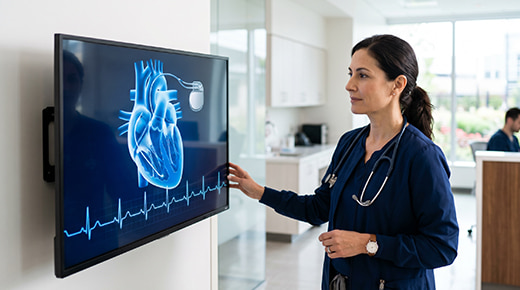
Pacemakers and ICDs are medical devices used to correct abnormal heartbeat patterns. A heart pacemaker monitors the heart when it beats too slowly. The condition is medically termed "Bradycardia", and it prevents the body from receiving enough oxygen-rich blood. The pacemaker monitors the heartbeat and sends a small impulse when the heart rate drops too low.
An ICD or implantable cardioverter defibrillator is meant for fast and dangerous rhythms. It can detect severe arrhythmias like ventricular tachycardia or fibrillation. When that happens, the ICD delivers a short shock to restore a safe heart rhythm. It is often used in patients with a history of cardiac arrest or serious heart failure.
The difference between a cardiac pacemaker and an ICD lies in what they are built to do. The pacemaker corrects slow rhythms. The ICD prevents sudden death from fast rhythms. In some cases, we use a combination device. Our cardiology team explains each option clearly before we proceed with any recommendation.
Our team recommends device implantation when a patient’s heart rhythm poses a risk to circulation, safety, or quality of life. Each case is reviewed using a structured evaluation process before we proceed with implantation.
A pacemaker is required when the heart’s electrical signals are delayed or blocked. Conditions like sinus node dysfunction and heart block reduce the heart rate and require support. An ICD is needed for patients who have experienced life-threatening arrhythmias or are at high risk due to weak heart function. Prior cardiac arrest or certain inherited disorders may also indicate the need for an ICD.
The most common signs of arrhythmias are fainting spells, dizziness, extreme fatigue, or irregular pulse. Patients may also experience sudden blackouts or palpitations. The symptoms often surface without warning and may be dangerous if left untreated.
The cardiology department of Aster Hospital relies on detailed tests such as ECG, Holter monitoring, echocardiography, and electrophysiological studies. Our team of experienced cardiologists also studies the patient's history of heart disease, medication response, and overall health status.
Our team uses this information to select the right solution, whether that is a heart pacemaker or an implantable cardioverter defibrillator.
Our cardiology team performs all device implantations inside a sterile catheterisation laboratory using precision tools and advanced imaging. The entire procedure is planned and takes 2-3 hours, usually, and is administered by experienced cardiologists.
Both pacemakers and ICDs provide measurable health benefits and life-saving protection. They are often the next step after medications are no longer effective.
Like all medical procedures, pacemaker and ICD implantations carry some risk. We discuss these thoroughly before proceeding.
Preparation plays an important role in ensuring a smooth procedure and recovery. Our team provides step-by-step guidance to reduce stress and confusion.
Our recovery protocols are designed to help patients return to life with improved cardiac output and improved survival.
At Aster Hospitals, we believe in offering expert-led, coordinated care for every patient who walks a structured care pathway with a high success rate. Our placement and ICD implantation services are driven by experience, precision, and safety.
If you or a family member is experiencing irregular heartbeats, fainting episodes, or has been advised by a cardiologist to consider a pacemaker or ICD implantation in Dubai, early evaluation at Aster Hospitals can prevent serious cardiac complications. Our electrophysiology and cardiology specialists provide advanced, evidence-based device implantation using modern cardiac catheterisation labs and 24/7 emergency support. Book your consultation today and take a proactive step toward a stable heart rhythm and lasting cardiovascular protection.
A pacemaker helps control slow heartbeats. An ICD monitors the heart for fast rhythms and can deliver a shock to correct them. Both improve heart safety.
The procedure is done with local anaesthesia and sedation. Most patients feel pressure, not pain. Mild discomfort at the incision is expected during healing.
Recovery takes one to two weeks for most patients. Full activity may resume after your doctor checks the wound and confirms the lead's stability.
Yes, you can travel and return to light exercise after recovery. Avoid contact sports or strong magnets. Our team will guide you on precautions.
Most devices last five to fifteen years, depending on usage and type. We check battery life during follow-ups and replace the generator when needed.
Yes. Being one of the leading cardiology hospitals in Dubai, we provide 24x7 emergency device support. Patients who arrive with cardiac arrest or high-risk arrhythmia are stabilised and offered timely ICD placement when needed.
Last updated: 03-07-2026