

Your heart depends on a steady flow of oxygen-rich blood to keep working properly. When the arteries that supply your heart become blocked, simple daily activities can suddenly become difficult, and symptoms like chest pain or…
24/7 Emergency and Critical Cardiac Care
Surviving a massive heart attack or navigating the immediate hours after complex open-heart surgery is just the first battle. The heart is stunned, the body is under immense systemic stress, and the margin for error is zero.
At Aster Hospitals UAE, our advanced emergency and critical cardiac care unit provides the relentless, second-by-second vigilance needed to stabilise the most fragile patients, bridging the gap between survival and a meaningful recovery.
Advanced cardiac critical care sits at the intersection of cardiology and intensive care medicine. A regular Intensive Care Unit is not the same as a specialised cardiac intensive care unit. The heart dictates the body's entire blood supply; when it fails, the lungs, kidneys, and brain quickly follow. Our CCU (Coronary Care Unit) is specifically engineered for the failing heart.
Every monitor, every alarm, and every specialist nurse is tuned into the nuances of cardiac hemodynamics. The primary goals of our cardiology critical care unit services are to maintain blood pressure, support failing organs, prevent lethal arrhythmias, and give the heart the time it needs to heal.
The patients who require critical cardiac care services are fighting immediate, life-threatening cardiac crises. You or a loved one might need our advanced critical cardiac care facilities if dealing with:
Acute Myocardial Infarction: A severe heart attack where a major artery is completely blocked, requiring emergency heart care.
Cardiogenic Shock: A state where the heart is pumping so weakly that vital organs are starving for oxygen.
Severe Acute Heart Failure: When the heart suddenly cannot keep up with the body's demands, causing fluid to build up dangerously in the lungs.
Lethal Arrhythmias: Dangerous, irregular heart rhythms that cause blood pressure to plummet and can lead to cardiac arrest.
Post-Cardiac Arrest: Requiring targeted temperature management and neurological protection after the heart has stopped and been restarted.
Managing a critically ill heart requires a relentless, structured protocol. Because the situation can change in a heartbeat, our teams rely on real-time data and rigorous interventions:
Standard blood pressure cuffs are not enough in the CCU. We use arterial lines to measure blood pressure beat-by-beat, and central venous catheters to monitor the pressure inside the heart. This tells us exactly how much fluid the heart needs and how hard it is working to pump it.
When medications aren't enough to support the heart, we deploy advanced mechanical support. This includes Intra-Aortic Balloon Pumps (IABP) to help push blood into the coronary arteries, and Extracorporeal Membrane Oxygenation (ECMO) to act as an artificial heart and lungs when the organs are failing.
When the heart fails, the lungs often flood with fluid. Our teams manage highly sophisticated ventilators to take over the work of breathing, reducing the oxygen demand on the struggling heart and letting it rest.
After a cardiac arrest, the brain is incredibly vulnerable. We use specialised cooling protocols to lower the body's temperature, slowing down the brain's metabolism and drastically reducing the risk of permanent neurological damage.
For patients emerging from the operating room, the cardiac surgery ICU is a highly specialised discipline. The first 24 to 48 hours after bypass or valve surgery are critical. The heart is recovering from the trauma of being stopped and restarted. Our surgical critical cardiac care team focuses on:
Strict Fluid and Electrolyte Balance: The heart is incredibly sensitive to potassium and magnesium levels after surgery; we manage these meticulously to prevent arrhythmias.
Chest Tube and Bleeding Management: Monitoring drainage from the chest cavity to ensure the surgical site is sealing properly.
Pacing and Rhythm Control: Using temporary pacemaker wires and medications to keep the heart beating at the perfect rate as it recovers.
Being stabilised in the cardiac intensive care unit or released from the heart emergency treatment unit is not the end of the journey; it is just the beginning. The physical toll of a critical illness is severe. Patients often experience profound muscle weakness and fatigue simply from lying in a bed while critically ill. The overall rehabilitation process, i.e., moving from the CCU to a step-down ward and eventually to cardiac rehab, spans several months.
Serious cardiac care involves more moving parts than most people expect. The ICU needs dedicated intensivists working side-by-side with cardiologists. The emergency response needs a team that can open blocked arteries within minutes. And the post-op recovery needs the best cardiology hospital in Dubai to ensure a seamless transition from the ICU to the cardiac ward.
At Aster, our intensivists, interventional cardiologists, and cardiac surgeons are working on the same case. For families going through the terrifying reality of a loved one in cardiac crisis, that joined-up structure is less about convenience and more about not falling through the gaps between departments.
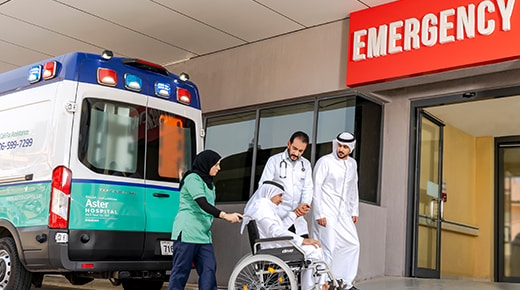
Moreover, patients can visit our facilities for 24/7 emergency cardiac care at multiple locations across the city, including Mankhool, Al Qusais, Jebel Ali, and Muhaisnah.
Our intensivists and cardiologists are specialists in the physiology of the failing heart. They have extensive experience managing complex hemodynamics, interpreting subtle changes in bedside monitors, and knowing exactly when to push forward and when to let the heart rest. Every cardiologist in Dubai at Aster Hospitals knows that the care provided in the critical cardiac care unit dictates the patient's long-term outcome.
A general ICU (Intensive Care Unit) treats a broad range of critical illnesses, from severe infections and trauma to multi-organ failure. A critical cardiac care unit is dedicated exclusively to the heart. Every monitor, medication, and team member in the cardiac unit is specifically focused on managing delicate heart rhythms, supporting blood pressure with powerful cardiac drugs, and guiding post-surgical heart recovery.
Open-heart surgery is a massive trauma to the body. In the first 24 hours, the risk of serious bleeding, irregular heart rhythms, and sudden drops in blood pressure is extremely high. The critical cardiac care unit provides the second-by-second monitoring required to catch and correct these life-threatening issues immediately.
It depends entirely on the severity of the condition. A patient admitted for an uncomplicated heart attack might stay for just 24 to 48 hours, while a patient in cardiogenic shock or recovering from complex surgery might require a week or more of continuous, round-the-clock support.
Yes, but visits are highly regulated. Because a critically ill heart needs complete rest and is highly susceptible to infection, visiting hours are usually restricted to short windows, and the number of visitors is limited. Our nursing team will guide your family on exactly when and how they can visit safely without compromising your recovery.
Last updated: 15-07-2026