


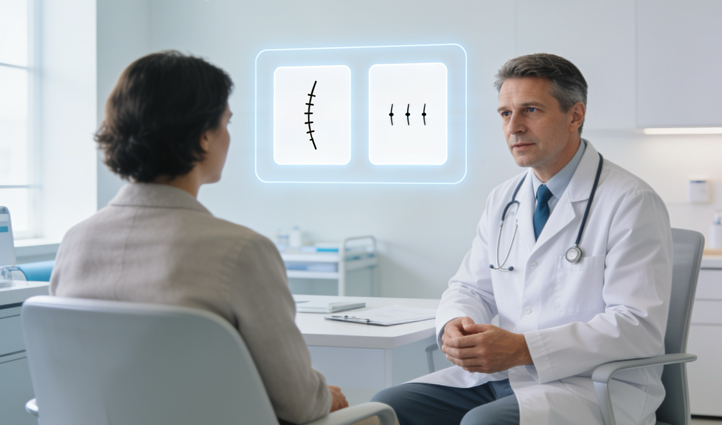
Finding the right surgical approach is a person's healthcare journey that requires a blend of advanced medical science and a clear understanding of one's own body's needs. In the fast-paced healthcare landscape of the UAE, patients often find themselves choosing between traditional methods and modern innovations. Making an informed decision starts with de-mystifying the terminology and looking closely at how different techniques impact your long-term wellness.
What is General Surgery?
To understand your options, we first need to look at the clinical foundation. Despite the broad name, this is a highly focused surgical speciality. It centres primarily on the abdominal cavity—dealing with the stomach, intestines, liver, and gallbladder—as well as the thyroid gland and various types of hernias.
Traditionally, this field relied on "open" procedures. This involves a single, larger incision that allows a general surgery doctor to see the organs directly and use their hands to perform complex repairs. While medical technology has moved forward, these traditional general surgery procedures remain vital for emergency traumas or very complex organ reconstructions where a wider field of view is medically necessary.
Understanding the Types of General Surgery
The types of general surgery offered in modern clinics are incredibly diverse. Surgeons use these methods to treat everything from acute infections to chronic digestive issues. Some of the most common general surgery procedures include:
- • Appendectomy: Addressing acute inflammation of the appendix.
- • Hernia Repair: Closing gaps in the abdominal wall to prevent tissue protrusion.
- • Cholecystectomy: Removing the gallbladder, often due to painful stones.
- • Colectomy: Surgical intervention for various bowel conditions.
Each of these tasks requires a surgeon who understands the delicate balance between removing diseased tissue and preserving healthy function.
What is Laparoscopic Surgery?
Many patients today specifically seek out a "keyhole" approach. It is a technique where the surgeon operates through several tiny incisions, usually no wider than a centimetre. During a laparoscopic surgery procedure, a small camera called a laparoscope is inserted into the body. It shows a clear, and the entire organs inside the abdomen cavity, magnified view on a monitor in the operating room. The surgeon then uses long, narrow instruments to carry out the procedure with precision. Since there is no large opening, recovery is usually easier for the patient.
General vs Laparoscopic Surgery: A Direct Comparison
When weighing general vs laparoscopic surgery, the differences usually come down to the "footprint" left on the body. In traditional open surgery, the larger incision requires the muscles and skin to undergo significant healing.
The benefits of laparoscopic surgery are rooted in its "minimally invasive" nature. Because the entry points are so small, patients generally report:
- • Significantly lower levels of post-operative pain.
- • Minimal blood loss during the operation.
- • A much lower risk of wound site infections.
- • Fewer internal adhesions (scar tissue) after the procedure.
Navigating the Laparoscopic Surgery Recovery Time
One of the biggest advantages for busy professionals in Dubai is the speed of healing. The laparoscopic surgery recovery time is often remarkably short. While an open surgery might keep a patient in the hospital for a week and away from work for a month, a laparoscopic patient can often go home within 24 to 48 hours. Many people find they can return to their light daily routines within just a few days, though heavy lifting is usually restricted for a few weeks to ensure the internal sites heal perfectly.
Accessing World-Class Surgical Precision in the UAE
Choosing where to have your procedure is just as important as the technique itself. Finding a reputable general surgery hospital in Dubai ensures that you are supported by the latest surgical tools, sterilised environments, and expert nursing staff.
Ultimately, your overall wellbeing and safety are in the hands of your specialist. Now seeking out the best general surgeon in Dubai means finding a doctor who combines technical mastery with a transparent, patient-first approach. They will assess your specific condition to decide if a laparoscopic approach is the safest and most effective route for your unique anatomy.
Moreover, your health journey deserves a tailored approach that prioritises both safety and a swift return to daily life. By choosing expert care at Aster Hospitals, we ensure your overall recovery is built on surgical precision, minimal discomfort, and long-term physical well-being.
Frequently Asked Questions
How do I decide which surgery is right for me?
This decision is made during a consultation with your surgeon. They will look at your BMI, previous surgical history, and the severity of your condition. While laparoscopy is often the first choice, some complex cases are still managed better through traditional methods.
Are the results of keyhole surgery as permanent as open surgery?
Yes. The internal repair—whether it is removing a gallbladder or fixing a hernia—is the same. The only difference is the size of the "window" the surgeon uses to do the work.
What should I expect during my first visit with a general surgeon?
Your doctor will perform a physical exam and likely request imaging like an ultrasound or CT scan. They will explain the procedure in detail, including the risks, benefits, and what to expect during your stay in a general surgery hospital in Dubai.
Will I have visible scars after laparoscopic surgery?
Laparoscopic scars are very small and typically fade into thin, silver lines that are barely noticeable over time. Open surgery results in a single, larger linear scar, which the surgeon will place as discretely as possible.