
Feeling unusually short of breath or becoming tired after simple everyday activities is not always a normal part of ageing. While these symptoms can have many causes, they may also indicate a problem with your heart. One possible…
Wisdom Tooth Extraction
Third molars, better known as wisdom teeth, erupt somewhere between the ages of 17 and 25 and normally develop four of them. The jaw, quite simply, often does not have space. When a wisdom tooth cannot come through properly, it becomes impacted: stuck beneath the gum, tilted sideways, or only partially visible. That is where things get complicated.
Impacted teeth are not always painful right away. Some sit quietly for years. Others cause infection, push against neighbouring teeth, or develop cysts around the unerupted crown. There is no single rule, but once symptoms start, they rarely resolve without intervention.
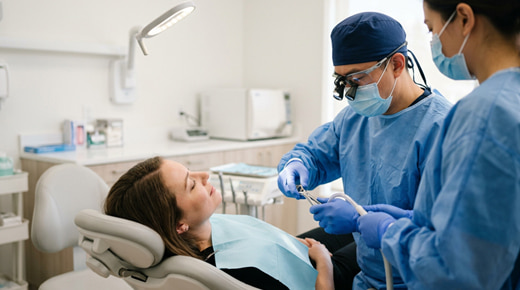
At Aster Hospitals, wisdom tooth extraction is carried out by oral and maxillofacial surgeons with dedicated training in dentoalveolar surgery. Simple eruptions and complex surgical cases undergo the same careful preoperative assessment.
Swelling around the gum, a bad taste or smell near the tooth, difficulty opening the mouth fully, and repeated infections in the same spot all point toward a third molar that is not sitting correctly.
Pericoronitis is an infection that can develop in the gum tissue that surrounds a partially erupted wisdom tooth. It may recur and can worsen quickly if not treated. Impacted wisdom teeth can also crowd nearby teeth and lead to cyst formation around the tooth.
Before surgery, the team reviews a panoramic dental X-ray or cone beam CT scan. The images show root anatomy, nerve proximity, and the amount of bone surrounding the tooth. A wisdom tooth sitting close to the inferior alveolar nerve requires a different plan from one that has almost fully erupted.
The wisdom tooth extraction procedure varies depending on the position and condition of the tooth. A wisdom tooth that has erupted fully into the oral cavity without any bony impaction may require only a short time to extract and can often be removed with forceps under local anaesthesia.
In contrast, a horizontally impacted tooth embedded within the jawbone requires a small gingival incision, careful removal of the surrounding bone, and sectioning of the tooth into smaller pieces before it can be extracted.
Swelling peaks around 48 hours post-surgery and gradually settles. Some trismus (reduced ability to open the mouth) is normal for the first few days. Moreover, patients should apply ice packs over the surgical site during the first 24 - 72 hours. After that, if there is an increase in swelling, hot fermentation packs can be given.
A stable clot is what heals the socket. Disturb it too early, and the bone beneath is left exposed. It is a condition called dry socket. The risk comes down to suction and pressure. Smoking and drawing liquid through a straw is strictly prohibited after wisdom tooth removal.
Even rinsing too forcefully can pull the clot loose before it has set. Soft foods are straightforward to manage during recovery. Patients should avoid hard, crunchy, or chewy foods until the site has healed.
Wisdom tooth extraction becomes seamless when the procedure is planned properly. The one that causes the most postoperative distress is dry socket (alveolar osteitis), in which the protective clot dislodges before healing is complete. It is not dangerous, but it is genuinely painful and needs prompt treatment.
A medicated dressing placed into the socket relieves the pain quickly. Mild changes in sensation around the chin, lower lip, or tongue may sometimes be noticed, especially when the nerve lies close to the tooth roots. In most cases, this improves gradually over time. With the help of experts, careful pre-operative imaging helps assess such risks in advance.
The surgeons at our dental and maxillofacial hospital in Dubai handle the full range of dentoalveolar cases, not just straightforward extractions. Digital imaging, surgical facilities, and structured post-operative follow-up are part of every case.
If you are looking for the best maxillofacial surgeon in Dubai for an impacted or complicated third molar, a proper consultation is the right starting point.
With expert, compassionate dental care readily available across our Aster facilities in Mankhool, Al Qusais, Jebel Ali, and Muhaisnah, you have immediate access to professionals who make even the most daunting dental surgeries feel manageable and safe.
Removing a deeply impacted third molar is never just about pulling a tooth. In fact, it is a delicate surgical exercise in protecting the surrounding nerves, jawbone, and adjacent teeth. Our surgeons bring a deep, practical understanding of facial and oral anatomy to every procedure. They ensure that even the most complex cases are handled with meticulous care.
Patients should rest on the day of surgery and apply ice packs to the cheek for the first 24 - 72 hours. Take prescribed medications as directed. Eat soft foods and avoid smoking, alcohol, and straws for at least 5 - 7 days.
During the tooth extraction procedure, local anaesthesia is used to reduce the pain. Post-operatively, there is soreness for two to four days. It is manageable with standard pain relief.
Surgical extractions cause more post-operative discomfort than simple ones. Most patients describe it as aching rather than sharp pain. It improves noticeably by day three.
The signs are jaw pain, gum swelling, repeated infections near the tooth, difficulty opening the mouth, or crowding of adjacent teeth. A dental X-ray usually confirms the severity of the condition.
The best suggestions to eat after wisdom tooth extraction are soup, yoghurt, scrambled eggs, mashed potatoes, and soft fruit. Avoid anything hard, crunchy, or spicy until the site closes over.
Chronic infection is the most common risk of leaving the condition untreated. Cysts can also develop around the impacted tooth; these are usually slow-growing but occasionally expand enough to damage the adjacent second molar. When that happens, the surgery required is more extensive than removal at an earlier stage would have been.
Last updated: 29-07-2026