

Feeling unusually short of breath or becoming tired after simple everyday activities is not always a normal part of ageing. While these symptoms can have many causes, they may also indicate a problem with your heart. One possible…
Tennis Elbow
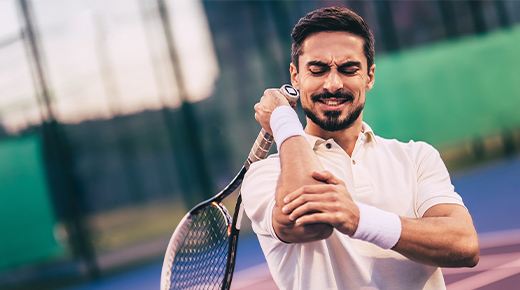
Tennis elbow is a common musculoskeletal condition that causes pain and reduced function in the elbow and forearm. It affects your grip strength, which in turn affects overall work productivity and quality of life. Our orthopaedic department at Aster Hospitals provides comprehensive support for tennis elbow diagnosis, treatment, and rehabilitation. Whether you are an athlete or someone engaged in repetitive hand movements, our team provides evidence-based management for optimal recovery.
We treat both early-stage and complex cases of tennis elbow. Our specialists provide advanced, evidence-based care, offering the best treatment for tennis elbow tailored to clinical assessment and severity.
Lateral epicondylitis (tennis elbow) is a degenerative tendon disorder caused by repetitive strain of the forearm extensor muscles. The pain is in the region of the lateral epicondyle, the bump on the outer elbow. It is not limited to tennis players. It may occur in any person who overworks their forearms in their daily or working life.
Repeated gripping, twisting or stretching of the tendon leads to microtears and degenerative changes. It causes pain, functional loss, and rigidity in daily activities. Most individuals suffering from this condition experience significant discomfort when lifting objects or holding tools. The pain can start slowly and then worsen with continued use without proper diagnosis and care.
Over time, it may disrupt work, fitness, or even daily activities. Simple tasks such as typing on a keyboard, holding a pen, gardening, buttoning clothes, or even shaking hands can feel uncomfortable, weak, stiff, or painful. Tennis elbow is a local tendon disorder. It is not usually associated with the elbow joint.
Our team of orthopaedic specialists and surgeons thoroughly evaluate tendon response to mechanical stress and strain, as well as changes in symptoms over time. We also examine the associated tightness in the adjacent muscle groups. Moreover, our specialists ensure that patients at Aster Hospital are appropriately diagnosed and treated. We treat acute pain and chronic recovery systematically and follow up for long-lasting outcomes.
Tennis elbow affects the outer side of the elbow near the lateral epicondyle. Golfer’s elbow affects the inner side. Both involve different muscle groups and strain patterns. Our team identifies the exact pain location, refers to the patient’s medical history and other conditions before beginning treatment.
The two conditions may feel similar, but require different types of assessment. Our doctors check the involved tendons and observe how your arm reacts to pressure or movement. Pain in the outer elbow is linked to wrist extension. Pain in the inner elbow is often related to wrist flexion. These differences help our team plan and prescribe the right recovery plan from the start.
Tennis elbow results from overuse of the extensor tendons. Golfer’s elbow affects the flexor tendons. The pattern of grip weakness and functional limits is also different. We guide you through the diagnosis so you can understand what type of tendon strain is present. Furthermore, our doctors explain the distinction clearly before starting treatment. This helps prevent confusion and ensures that your therapy supports long-term recovery. If you are not sure which condition is affecting your elbow, we recommend visiting our orthopaedic team for a comprehensive evaluation. Early diagnosis supports timely clinical planning, enables appropriate treatment strategies, and leads to better outcomes.
The diagnosis of tennis elbow at Aster Hospital follows a clear, stepwise plan. We begin with clinical signs and confirm the cause through detailed evaluation.
Our orthopaedic specialist performs a detailed physical examination to assess pain location, tendon tenderness, and elbow function. The joint is evaluated through resisted wrist extension, forearm rotation, and pressure testing to identify tendon strain. We also review your medical history, occupational activities, sports involvement, and repetitive arm movements to determine the underlying cause of symptoms. At Aster Hospitals in Dubai, this structured assessment helps confirm lateral epicondylitis and rule out other elbow conditions.
Imaging tests are recommended when symptoms are persistent, severe, or unclear after the initial clinical evaluation. X-rays help rule out joint abnormalities such as arthritis, fractures, or calcification. Ultrasound imaging allows real-time assessment of tendon structure and inflammation, while MRI provides detailed evaluation of soft tissue damage, tendon degeneration, or associated injuries. These investigations help confirm the diagnosis and guide appropriate treatment planning.
We assess grip strength and functional capacity using validated measurement tools to evaluate the severity of tendon involvement. This assessment helps determine how the condition affects daily activities such as lifting, typing, or holding objects. Monitoring grip strength over time also helps track recovery progress and evaluate the effectiveness of treatment interventions.
A detailed activity assessment helps identify movements that contribute to tendon strain. We evaluate your work tasks, sports participation, posture, and repetitive hand or wrist use to determine specific triggers. Understanding these factors enables our team to recommend activity modifications, ergonomic adjustments, and preventive strategies to support recovery and reduce the risk of recurrence.
We provide individualised tennis elbow treatment plans based on the severity of symptoms, functional limitations, lifestyle demands, medical history and recovery goals. Each treatment plan may include conservative therapy, advanced regenerative procedures, or surgical intervention when required to restore elbow function and relieve pain.
We advise controlled rest of the elbow. You will also receive guidance on reducing strain without stopping essential tasks entirely.
We work with our in-house physiotherapists who design elbow stretches and grip routines to improve healing without stressing the injured area.
We may suggest short-term relief options. These are tailored to your body’s response and always combined with movement therapy.
Our team may recommend braces that reduce tendon strain. These are helpful during daily tasks or initial healing.
PRP therapy uses growth components from your blood to help tendon healing. We offer this option when conservative treatment shows limited improvement.
When pain is severe or persistent, we may provide targeted injections. These are delivered precisely to reduce inflammation around the tendon.
This non-invasive method uses sound waves to stimulate healing. It is useful for patients with chronic symptoms or delayed recovery.
If the pain does not improve after all non-surgical treatments, our orthopaedic specialists may advise a tennis elbow operation using minimal incision techniques.
Minimally invasive tendon repair involves making a small incision or using arthroscopic (keyhole) techniques to:
Because the incision is small, this approach typically results in less soft tissue disruption, reduced post-operative discomfort, minimal scarring, and faster functional recovery compared to traditional open surgery.
Surgical treatment for tennis elbow is usually considered only after 6–12 months of failed conservative management and is most effective in carefully selected patients with persistent pain and functional limitation.
Tennis elbow management does not stop at recovery. Our team of orthopaedic doctors, surgeons and clinical specialists helps you prevent recurrence with practical changes in posture, technique, and movement.
We teach you safe methods for lifting and gripping. You also learn to adjust technique during repeated hand and wrist use.
We recommend strength exercises that build resistance in the wrist and elbow. These support your tendons and protect your joints in the long term.
We help you choose tools that reduce arm fatigue. These adjustments make daily movement easier and reduce tendon stress.
Our plan includes scheduled breaks and simple stretches. This allows your muscles to recover while maintaining flexibility and strength.
Recovery from tennis elbow (lateral epicondylitis) varies based on several clinical factors, such as:
Moreover, healing or recovery timelines may differ between acute inflammatory presentations and chronic tendinosis. Our treatment approach follows a structured, patient-specific rehabilitation protocol based on clinical progress, pain levels, tendon-healing response, and functional recovery.
Mild cases recover in four to six weeks. Moderate cases may take 3 to 6 months, depending on the tendon’s healing rate.
We increase the load in small steps. Our physiotherapists guide you through each phase to restore strength while avoiding flare-ups.
We track healing through grip tests and movement checks. These reviews help us decide if therapy should continue or change direction.
You can return to full activity only when movement is painless and strength is restored. We provide clear thresholds for every task. The individualised care plans help optimise recovery time, restore grip strength, and facilitate a safe return to daily activities, work, and sports.
At Aster Hospitals, our goal is clear. We want to help you recover with the least disruption to your routine. Our team of experienced professionals supports every step of the end-to-end tennis elbow treatment.
Our team includes orthopaedic doctors in Dubai with proven experience in tendon care. They manage tennis elbow with high clinical success.
Each patient receives a plan that reflects their lifestyle and stage of injury. We support early return to movement wherever possible.
Our orthopaedic hospital in Dubai provides complete access to advanced, evidence-based treatment modalities for musculoskeletal conditions. These advanced healing methods include regenerative biological therapies (Platelet-rich plasma (PRP) injections and other orthobiologic treatments) designed to support tendon repair at a cellular level.
Our rehabilitation team works with your doctor for clinical assessment, imaging evaluation, and functional analysis to ensure optimal recovery, pain relief, and safe return to daily activities. Moreover, our team of rehabilitation experts helps ensure your muscles regain function and your tendons remain protected.
Our approach centres on patient care, aiming for lasting recovery, effective pain relief, and restored function in every case.
Our team offers transparent billing. We provide detailed breakdowns and support with documentation for your insurer. Most major health plans cover treatment for tennis elbow. You can speak to our billing desk to understand the process clearly. We ensure your cost discussions are handled with clarity and support.
Tennis elbow can progressively affect arm strength, daily function, and work performance if left untreated. Early diagnosis and structured treatment help relieve pain, restore grip strength, and prevent recurrence. At Aster Hospitals in Dubai, our orthopaedic specialists provide comprehensive evaluation, personalised treatment, and guided rehabilitation for effective recovery.
If you experience persistent elbow pain or difficulty performing routine activities, a timely consultation with a qualified orthopaedic doctor can support faster healing and long-term joint health.
Tennis elbow is a tendon problem characterised by pain near the outer elbow due to repeated wrist movement or overuse.
Tennis elbow recovery time depends on the severity of the condition. Mild cases improve in weeks, while chronic cases may take months.
A tennis elbow operation is only needed if pain persists after all other treatments. We try non-surgical care first in every case.
You must rest until the pain reduces. After that, gradual movement is allowed. Our team will guide when it is safe to return.
Yes. We offer PRP therapy, shockwave treatment, and minimally invasive tendon surgery at our orthopaedic hospital in Dubai.
You can prevent recurrence by using proper technique, stretching regularly, and strengthening your arm muscles with guided exercises.
Last updated: 01-07-2026