

Feeling unusually short of breath or becoming tired after simple everyday activities is not always a normal part of ageing. While these symptoms can have many causes, they may also indicate a problem with your heart. One possible…
Cataracts
Cataracts commonly develop with age and can gradually affect how clearly you see. In most cases, cataract surgery offers a reliable way to restore vision, with well-established safety and outcomes. At Aster Hospitals UAE, doctors perform cataract surgery using modern techniques such as phacoemulsification and femtosecond laser support, which enable smaller incisions and faster recovery for many patients.
By choosing advanced intraocular lenses (IOLs), this surgery can also address pre-existing vision issues like nearsightedness or astigmatism, helping many people significantly reduce their need for glasses in everyday life.
A cataract is a condition in which the eye's natural lens gradually becomes cloudy, causing blurred or reduced vision and making everyday activities more difficult as it progresses. This process usually develops slowly and affects daily activities over time.
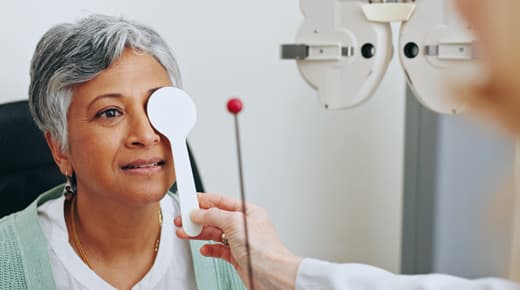
Patients should consider cataract surgery in Dubai when vision interferes with routine activities such as reading, driving, or recognising faces. Early evaluation by an experienced ophthalmologist ensures timely intervention.
Choosing the right cataract surgery procedure depends on your eye health and lifestyle needs.
This is the global gold standard. Your cataract surgeon makes a tiny incision (usually less than 3mm) and uses ultrasound energy to break the cloudy lens into fragments before vacuuming them out. It requires no stitches and allows for a cataract surgery recovery time that is remarkably short.
For those seeking the highest level of accuracy, this "robotic" approach uses a laser to create perfect incisions and soften the cataract. It is particularly effective for patients choosing premium IOLs, as it ensures the lens sits in the exact centre of the visual axis.
This approach treats the cataract while simultaneously correcting pre-existing vision errors like nearsightedness, farsightedness, or astigmatism. By using advanced biometry and premium lens implants, we turn a medical necessity into a life-enhancing vision correction opportunity.
The "lens" is the most critical choice you will make.
Monofocal: Set for one distance (usually far). You will likely still need reading glasses.
Multifocal/Trifocal: Designed to provide clear vision at near, intermediate, and far distances.
Toric: Specifically designed for patients with astigmatism.
EDOF (Extended Depth of Focus): Provides a continuous range of high-quality vision.
Moreover, ask our specialist which lens suits your eyes and your specific daily habits, such as heavy screen use or night driving.
The entire cataract surgery procedure usually takes 15–30 minutes per eye.
While most patients recover without difficulty, certain symptoms should not be ignored. You should contact your doctor immediately if you notice any of the following:
Early attention to these signs helps prevent complications and ensures proper healing after surgery.
Choosing a leading or the best eye hospital in Dubai plays an important role in both safety and long-term visual results. At Aster Hospitals, patients receive care that focuses on accuracy, comfort, and clear communication at every stage of treatment.
The ophthalmology team includes fellowship-trained surgeons with hands-on experience in managing routine as well as complex cataract cases. Our ophthalmologists or cataract surgeons use laser-assisted systems along with standard phacoemulsification techniques to remove the cloudy lens and place the intraocular lens securely.
These methods are widely used in routine practice and contribute to a high cataract surgery success rate. Moreover, Aster Hospitals have ophthalmology centres across Dubai, including Mankhool, Al Qusais, Jebel Ali, and Muhaisnah. Patients can visit these centres for consultation, surgery, and follow-up without difficulty.
Aster Hospitals hosts highly qualified and board-certified ophthalmologists with extensive experience in managing complex cataract conditions. Each ophthalmologist in Dubai focuses on patient-centred care and evidence-based treatment. Specialists in our eye care team specialise in advanced phacoemulsification and laser-assisted surgical suites.
Yes, it is considered safe. Hospitals follow strict medical standards and use modern techniques, which help achieve consistent and reliable results.
Most people notice better vision within a day. Routine work can usually resume within a week, while full healing may take a few weeks.
Do not rub your eyes, avoid heavy lifting and swimming for a couple of weeks, and use your prescribed eye drops regularly. Wearing a protective shield while sleeping also helps.
You may need surgery when blurred vision starts affecting daily tasks like reading or driving, especially at night. Doctors usually advise treatment before the cataract becomes too dense.
The cost varies depending on the type of procedure chosen (standard phacoemulsification or femtosecond laser-assisted) and the intraocular lens (IOL) you select, such as monofocal, multifocal, or toric lenses. It also depends on your insurance coverage.
No, a cataract cannot grow back once the natural cloudy lens has been removed. However, some patients experience a common condition called posterior capsule opacity (PCO), where the thin membrane holding the new lens becomes cloudy over time.
The intraocular lenses (IOLs) implanted during cataract surgery are designed to be permanent. They are made of highly durable, biocompatible materials that do not break down, degrade, or wear out over time.
Last updated: 02-07-2026