

We all want a smile that we can wear with pride. However, sometimes we can lose our natural, beautiful smiles for several reasons. Maybe you chipped a tooth on a hard piece of food, your morning coffee has finally caught up with…

Kidney Stone Management
Kidney stones are a common urological condition that can cause severe pain and complications if untreated. At Aster Hospitals in Dubai, we provide comprehensive kidney stone diagnosis, treatment, and long-term management.
Many patients seek specialised evaluation for recurrent or complex kidney stone treatment requiring advanced management. Our kidney stone management programme focuses on accurate diagnosis, advanced treatment, and long‑term prevention.
Kidney stones are hard, mineral and salt deposits that form inside the kidneys. They form when urine becomes concentrated and minerals crystallise. A small stone may pass unnoticed, while a large one can block urine flow and cause severe pain that travels to the lower abdomen and also to the genitals.
Early identification of kidney stones helps prevent infection, obstruction, and long-term kidney damage. Aster Hospitals focuses on early diagnosis and clear communication so that every patient knows what is happening and why timely treatment matters.
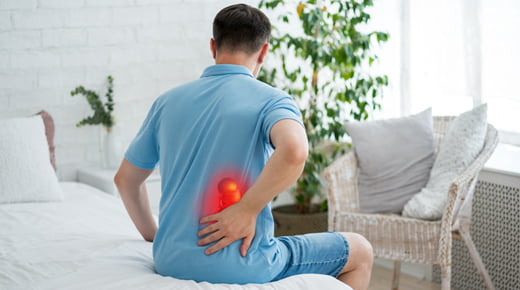
Many people arrive with symptoms such as flank pain in the lower back area of the kidney or only in the testis in males or the urethral tip in females, blood in the urine, or nausea. The first step is to confirm whether a stone exists and understand its characteristics.
Our doctors begin with a detailed clinical evaluation of symptoms, medical history, dietary habits, and previous stone episodes. This helps us determine whether the pain pattern and urine changes point to a stone or another issue.
We test urine for blood, infection, or mineral crystals. Even a trace of calcium oxalate or uric acid can help us confirm the diagnosis.
We measure calcium, uric acid, and markers of kidney function by taking a specialised blood sample for routine blood tests. The results reveal whether a metabolic imbalance is driving stone formation or an infection, and help assess kidney function.
We use ultrasound, X‑rays, or CT scans to locate and measure the stone. These images show whether it is moving through the urinary tract or obstructing flow. Precise imaging helps us decide if conservative care is enough or if the ‘kidney stones treatment’ by removal procedure is necessary. A non-contrast CT scan is considered the gold standard for diagnosing kidney stones due to its high sensitivity and accuracy in assessing stone size and location.
Treatment depends on the size, composition, and location of the stone as well as the patient’s general health. Our goal is always to relieve pain, remove the stone, and prevent it from returning.
Smaller stones can often pass naturally with proper hydration and effective guidance.
When the stone is too large or stuck in the urinary tract, we use advanced yet gentle techniques to remove it.
For patients who form stones repeatedly, our focus extends beyond removal to long‑term prevention.
At Aster Hospitals, we prioritise kidney stone treatments that are effective yet gentle on the body.
These benefits allow patients to resume their routines quickly while ensuring that the kidneys remain protected.
Once a stone is treated, preventing the next one becomes crucial. Our kidney stone management team helps patients adopt small yet effective changes that lower risk.
Prevention is a partnership. We provide education, follow‑up testing, and personalised diet plans to make long‑term kidney health easier to maintain.
Many patients search for a kidney stone specialist near me and want to know what makes Aster different. We focus on three things: International guidelines followed, multidisciplinary team care, and advanced endourology infrastructure, such as:
Aster Hospitals offer coordinated care where every specialist knows your history and works towards your safety.
Our team includes experienced urologists, nephrologists, and nurses who work together to deliver precise and timely care. We combine clinical experience with imaging and laser technology to offer a full range of options. From small stones that pass naturally to complex cases requiring surgical intervention, we design each plan to help you recover quickly and safely.
The best treatment option depends on the stone’s size, location, and composition. Small stones may pass naturally with effective hydration. Larger ones often need procedures such as laser lithotripsy or ESWL. Our doctors assess every case carefully before recommending a method.
Yes, some do. Stones smaller than five millimetres often pass with increased water intake and medication. Regular monitoring ensures there are no complications during passage.
Modern kidney stone removal procedures involve minimal pain. Anaesthesia is used during surgery, and post‑procedure discomfort is controlled with medication. Most patients resume normal activity soon after.
Untreated stones may block urine flow, cause infection, or lead to kidney damage. They can also trigger repeated pain episodes. Timely treatment avoids these complications. Aster Hospitals provides advanced kidney stone treatment in Dubai for patients seeking safe and effective care for ‘kidney stone Dubai’ cases.
Yes, but preventive care significantly reduces recurrence. Our team guides patients on diet, hydration, and periodic testing to prevent new stones from forming.
Consult a kidney stone specialist immediately if you have persistent flank pain, blood in urine, fever, or vomiting. Quick evaluation prevents complications and ensures faster relief.
Management covers every aspect from diagnosis and pain control to removal and prevention. At Aster Hospitals, we view management as an ongoing process that maintains kidney health beyond surgery.
Initial management usually involves fluids, pain control, and dietary adjustments such as adequate dietary calcium intake, which is recommended, as extremely low calcium diets may increase oxalate absorption. If the stone does not pass naturally, minimally invasive procedures are considered.
Last updated: 23-09-2026