

Your heart depends on a steady flow of oxygen-rich blood to keep working properly. When the arteries that supply your heart become blocked, simple daily activities can suddenly become difficult, and symptoms like chest pain or…
Minimally Invasive Cardiac Surgery
At Aster Hospitals in Dubai, minimally invasive cardiac surgery (MICS) is performed using evidence-based protocols and advanced surgical technology to treat structural and functional heart conditions. This minimally invasive heart surgery approach reduces surgical trauma, improves recovery time, and maintains outcomes comparable to conventional open-heart procedures.
We rely on evidence-based protocols and proven technology to make every procedure smoother and safer. For patients in the UAE, our centres in Dubai offer complete MICS treatment from early screening to full surgical recovery. Our team supports patients and families throughout the process.
Minimally Invasive Cardiac Surgery (MICS) is a specialised form of cardiac surgery that uses cardiopulmonary bypass in traditional operations. Rather than performing a sternotomy (a surgical procedure in which the sternum is vertically divided using a saw to access the heart, lungs, and mediastinal structures), our surgeons create small intercostal incisions to access the heart. These cuts are specifically designed for cameras and instruments to reach the heart, enabling real-time monitoring and guiding every step of the way.
In open-heart surgery, we use a median sternotomy where the sternum is divided to access the heart. This allows for clear exposure but requires more healing time and results in larger scars. In contrast, MICS surgery uses much smaller ports that reduce tissue disruption.
We routinely perform valve repair or replacement, coronary artery bypass, atrial septal defect closure and tumour removal using MICS protocols. Depending on the case, we may also use robotic arms or endoscopic tools to support the procedure.
Not every heart condition can be treated using a minimally invasive method. But many of our patients do qualify for MICS surgery after a full diagnostic review. Our cardiology team evaluates heart structure, comorbidities and previous surgical history before recommending MICS.
MICS can be considered for both young and older patients who meet safety criteria. Older adults with stable vitals and good organ function are often eligible.
This process addresses valve disorders, coronary artery disease, and congenital heart defects. Valve problems such as mitral valve prolapse or aortic stenosis respond well to MICS techniques.
We also treat single or double vessel coronary artery disease and select congenital heart conditions through this route. Patient eligibility also depends on lung function, body habitus, prior cardiac surgery, and the complexity of coronary disease.
Team of experienced cardilogists at Aster Hospitals in Dubai conducts ECGs, echocardiograms, cardiac MRIs, CT angiograms, and blood tests to determine whether the heart's structure and function are suited to MICS.
These reports limit MICS risks and ensure good surgical planning. Additional MICS risks may include stroke, blood clots, anaesthesia-related complications, or conversion to open surgery in rare cases.
At Aster Hospitals, we often suggest MICS when it can help reduce physical stress without affecting the outcome. The benefits are visible within days of the procedure, and most patients experience a smoother recovery timeline.
The incisions are usually 2 to 3 inches in size, compared to an 8- to 10-inch cut in open-heart surgery. This results in less visible scarring.
We ensure that patients return home sooner [often within three to five days]. They regain strength faster and can resume everyday tasks with less fatigue.
Smaller wounds reduce exposure of deeper tissues, lowering the risk of infection in the bone and muscle layers.
Patients report lower pain scores during the first week, with fewer stitches and less nerve disruption. This leads to better sleep and mobility.
Many patients prefer MICS for personal reasons. The surgery leaves behind subtle marks that are easier to conceal with clothing or accessories.
Clinical studies report reduced hospital stay, lower postoperative pain scores, and faster return to daily activities compared to conventional sternotomy procedures.
Our team is one of the best teams, as cardiologists in Dubai follow a detailed protocol for MICS surgery. We begin with preoperative imaging and case discussions between cardiac surgeons, anaesthetists, and intensivists. Every patient is assigned a care coordinator.
Once under anaesthesia, small incisions are made on the right or left side of the chest. A thoracoscope is inserted to view the heart. We use long instruments to perform repairs while monitoring the process through video feeds.
We choose between thoracoscopic, robotic-assisted or port-access based on case complexity. The use of robotic tools helps in deep or delicate structures with better precision.
Our anaesthesia team uses total intravenous anaesthesia (balanced anaesthesia). Throughout the procedure, we monitor cardiac rhythm, oxygen levels and internal pressures using specialised machines.
After surgery, patients are shifted to the ICU for close observation. Vital signs are tracked, pain is managed, and movement is encouraged within 24 hours.
MICS is generally safe and effective, but like all surgeries, it carries some risks. We reduce complications by strict screening, infection control and anaesthesia support. Our surgeons also have years of training in MICS procedures.
Patients may face minor bleeding or a temporary irregular heartbeat. In rare cases, wound infection or fluid build-up may occur.
MICS has a lower risk of sternal complications and wound breakdown. It also reduces the need for blood transfusions in many cases. Symptoms that may indicate the need for MICS treatment include chest pain, shortness of breath, fatigue, heart murmurs, palpitations, and reduced exercise tolerance.
We use prophylactic antibiotics, anticoagulation protocols, and regular wound checks. Our ICU staff are trained to identify early signs of concern.
Preparation plays a key role in the success of MICS treatment. Our care team helps each patient get ready through tests, instructions, and reassurance.
Patients are encouraged to reduce salt and sugar intake. Smoking and alcohol use must stop at least two weeks before the operation.
Chest imaging, blood clotting tests, cardiac assessments, and lung function reviews are scheduled one to two weeks in advance.
We provide clear instructions about when to stop blood thinners or diabetic medication. Patients must bring all prescriptions to the hospital.
Many patients feel anxious. Our team offers counselling and patient education as part of the process. So patients and their family members have a comprehensive understanding of the whole process.
Recovery from MICS is often easier than traditional cardiac operations. Still, it requires active participation from the patient and family. We guide every step.
Patients stay for three to five days. Walking begins within 24 hours. Drain removal, oral feeding, and stair-climbing are milestone markers. The procedure typically lasts 3–6 hours, depending on surgical complexity. Some procedures may require temporary cardiopulmonary bypass to maintain circulation during surgery.
Pain is managed using oral or injectable medications. Wounds are cleaned regularly with antiseptics. Dressings are changed based on healing.
Driving, lifting, and strenuous activity are restricted for four to six weeks. Walking, breathing exercises, and light household work are encouraged.
We schedule follow-ups at 1 week, 1 month, and 3 months. ECGs and echocardiograms help us monitor heart function during this phase.
Choosing the right cardiac care centre is crucial. At Aster Hospitals, we offer the experience, infrastructure, and post-care coordination that patients need to ensure comprehensive clinical care.
Our hospital is recognised as one of the best cardiology hospitals in Dubai, supported by experienced cardiac surgeons, advanced infrastructure, and international treatment standards.
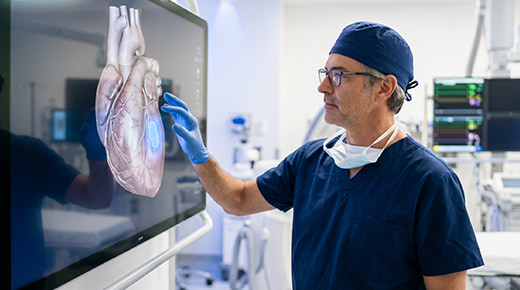
We use 3D thoracoscopic cameras, robotic arms, and high-definition operating suites. It leads to better outcomes and fewer complications.
From admission to discharge, each patient is assigned a care coordinator who tracks progress and shares updates with families.
Most patients return to work within 4–8 weeks, depending on recovery progress. Cardiac rehabilitation programs significantly improve long-term heart function.
The cost of MICS surgery depends on the diagnosis, room type, the doctor's preference, and the use of robotic tools. We share estimates in advance and support insurance pre-approvals wherever applicable. The cost of MICS surgery in Dubai varies depending on the procedure's complexity, the duration of the hospital stay, the surgeon's expertise, and the use of robotic assistance. International patient services and insurance coordination are available.
MICS sign relies on making small cuts between the ribs without dividing the breastbone. Open-heart surgery uses a larger central cut and involves more recovery time.
Many older patients with stable vital signs can safely undergo MICS. Our team, as one of the best cardiology hospitals in Dubai, performs complete evaluations before confirming eligibility.
Most patients return to regular activities within 4 to 6 weeks. Complete recovery varies based on age, condition, and response to rehab.
Yes. Robotic tools allow higher precision in deep or complex areas. Surgeons still control the tools, so safety and outcomes are maintained.
We perform echocardiograms, CT scans, blood tests, ECGs, and anaesthesia reviews to check if the heart and lungs can support the procedure.
MICS may not suit complex or multiple cardiac issues. It also requires highly trained surgeons and specialised tools, which may not be available everywhere.
When performed by experienced teams in accredited centres such as Aster Hospitals, MICS is considered safe, with high success rates and reduced complications.
Last updated: 12-08-2026