


Asthma is one of the most common reasons people turn to respiratory care, yet it's often under-diagnosed and under-treated, particularly in low- and middle-income countries.
When asthma goes under-treated, people can end up…
Neurocritical Care
Acute brain injury requires close observation and thorough neurological monitoring. At Aster Hospitals, patients are managed in designated intensive care units with monitoring facilities and access to medical and surgical care. Care includes airway support, maintenance of blood pressure, and measures to reduce secondary injury.
While a general ICU handles everything from heart attacks to kidney failure, a neurointensive care unit focuses exclusively on the brain and its complex pathways. It is a highly specialised discipline where clinicians manage the patient's overall physiological stability, yet every clinical decision is meticulously calibrated to protect delicate brain tissue and preserve neurological function.
By using a dedicated neurointensive care approach, our board-certified neurologists detect subtle changes in a patient's condition (often missed by standard monitors) and act before permanent damage takes hold.
The conditions treated in the neurointensive care are:
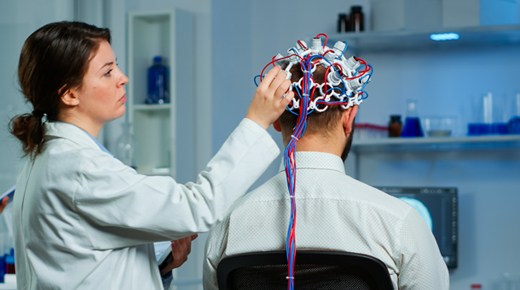
Our neurotrauma ICU is packed with the latest diagnostic tools that act as "windows" into the brain. We use EEG to watch for silent seizures that don’t show physical shakes but still damage the brain.
This tech-heavy approach, led by dedicated neurointensivists, ensures that our neurocritical care protocols meet the highest global benchmarks. We have on-site, rapid-access CT and MRI suites, meaning we never lose precious minutes transporting a critical patient across a building for a scan.
Every neurologist in Dubai at Aster Hospitals brings years of experience in handling acute crises. They collaborate daily with neurosurgeons, cardiologists, and specialised therapists. This "think-tank" approach at our neurology hospital in Dubai ensures that while treating conditions related to the brain, we keep the rest of the body strong and ready for recovery.
Our emergency teams activate the "Code Stroke" system on patient arrival, ensuring that the moment a patient arrives, the lab, imaging, and neurology teams are already moving. We focus on the "Golden Hour”, i.e., the critical window where medical intervention can actually reverse the effects of a stroke or injury.
Step 1: Rapid Stabilisation: Monitoring and optimising blood pressure.
Step 2: Intensive Monitoring in Neuro ICU: This is the "quiet" phase of healing, where we maintain the environment to support the brain's repair under 24/7 observation.
Step 3: Rehabilitation & Follow-Up: We move patients from the ICU to specialised wards as soon as they are stable, helping them relearn skills and regain their quality of life.
Families trust Aster because we combine clinical excellence with a deep sense of empathy. We understand that seeing a loved one in an ICU is terrifying. That is why our intensive care teams maintain transparent communication.
We operate with a "recovery-first" mindset. Our survival rates and recovery outcomes reflect our commitment to international safety standards and our relentless pursuit of medical perfection.
Moreover, neuro patients can visit Aster Hospitals at several locations like Mankhool, Al Qusais, Jebel Ali, and Muhaisnah in Dubai.
The team of Aster Hospitals includes intensivists and board-certified neurologists involved in the management of neurological conditions with several years of experience. The care is planned based on clinical findings, with treatment decisions that are guided by established medical protocols and ongoing assessment of the patient’s neurological status.
It depends on the neurological status. Some stay for 48 hours of observation, while others with severe brain trauma may need several weeks of intensive support.
Spinal injuries and sudden brain bleeds (aneurysms) all require the specialised monitoring of a focused neuro unit.
Visit us if you experience sudden loss of vision, unexplained weakness, chronic severe headaches, or any sudden change in your ability to speak or walk.
The initial signs- tingling in limbs, frequent balance issues, sudden confusion, or persistent tremors are often the first red flags that a nerve or brain issue is developing.
Essentially, yes. Neurocritical care is the medical practice, and the neurointensive care is the physical place where that high-level care happens.
They manage the delicate balance of keeping a patient’s blood pressure and oxygen levels perfect to ensure the brain gets exactly what it needs to heal.
Last updated: 13-07-2026